A rebound can feel like a trap, or it can be the market's way of saying, "We overreacted." With Samsung Electronics rebound chatter rising again in March 2026, many new investors are asking the same thing: is this bounce real, or just noise?
We'll keep this simple and practical. We'll look at price action, Korean-style moving averages, retail investor psychology, and the business drivers that usually matter most for Samsung.
(Quick ticker note for global charts: we often see Samsung Electronics as Samsung Electronics (005930.KS). The ".KS" (KOSPI) and ".KQ" (KOSDAQ) suffixes are used on platforms like Yahoo Finance and TradingView.)
Executive Summary: Our Rebound Call (March 2026)
Rating: [BUY]
Samsung Electronics (005930.KS) closed at ₩190,000 (about $138.50) on March 11, 2026 (USD estimate uses roughly ₩1,372 per $1). After a sharp drop to ₩173,500 on March 9, the snapback tells us buyers still show up fast when the tape looks "too cheap."
Here's our bottom line for newbies: we like Samsung as a rebound candidate, but we don't like chasing. A staged approach (split buys) fits the stock's recent swing behavior.
A few facts shaping our view:
- Recent volatility is real, with beta around 1.12 and big day-to-day moves.
- Momentum is improving, with RSI near 54.31 (neutral, not stretched).
- Street expectations remain supportive, with an average target near ₩228,968 (roughly +21% from ₩190,000).
- This is an individual stock, not an ETF, so single-name risk matters.
For a valuation-focused read alongside price momentum, we also reference Samsung valuation after recent share momentum.
Technical Setup: The Korean "Half-year Life Line" and What It Signals
Short-term rebounds often start the same way, a fast drop, a fear-driven flush, then a sharp bounce that tests whether sellers are still in control.
In Korea, many traders treat the 120-day moving average as the "Half-year Life Line." The idea is simple: if price holds above it, the uptrend "stays alive." If price stays under it, rebounds can fade.
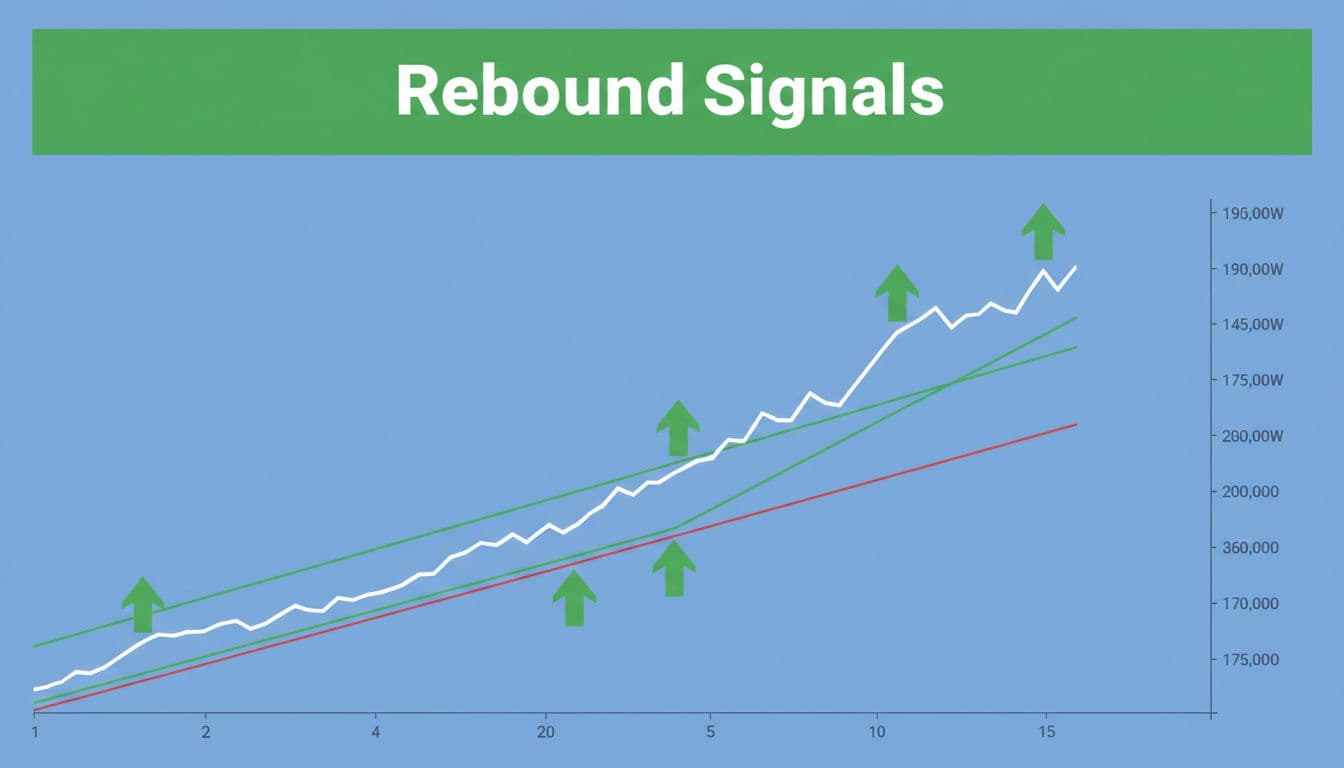
To keep expectations realistic, some moving averages below are approximate (based on available recent closes), and the 120-day level was not provided in the retrieved dataset.
| Moving Average | Level (KRW) | Level (USD, approx) | How we read it |
|---|---|---|---|
| 5-day MA | ~₩186,200 | ~$135.70 | Short-term trend has turned up again |
| 20-day MA | ~₩185,000 to ₩190,000 | ~$134.80 to $138.50 | Still a "battle zone," not a clean breakout |
| 120-day MA ("Half-year Life Line") | N/A (not retrieved) | N/A | Key trend filter, we check it before chasing |
Takeaway: at ₩190,000 ($138.50), Samsung sits above its short-term average, which supports the rebound narrative. Still, without confirming the 120-day level, we treat this as a rebound in progress, not a finished trend reversal.
If we want one beginner rule, it's this: rebounds are easier to buy after they survive a second pullback.
Value Chain Positioning: Why Samsung Often Rebounds Hard
Samsung isn't just "a phone company." It sits across multiple profit engines, and that's why the stock can bounce quickly when sentiment shifts. When one segment slows, another can stabilize the story.
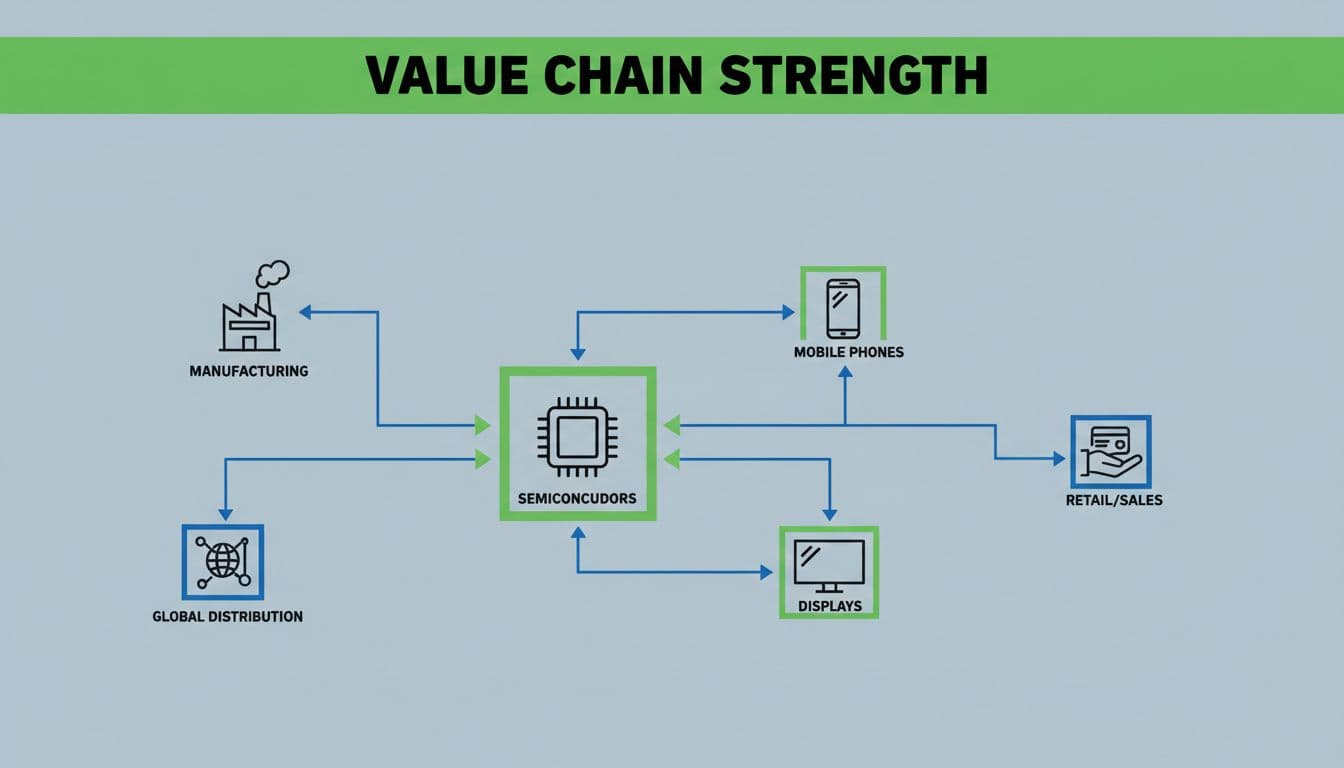
Here's how we frame Samsung's value chain in plain terms:
Semiconductors (memory and beyond): This is the heartbeat. When the chip cycle improves, Samsung often re-rates fast. When it turns down, the stock can feel heavy, even if phones sell well.
Mobile (Galaxy ecosystem): Product cycles can act like a sentiment reset. Samsung launched the Galaxy S26 on March 11, 2026, which helps attention rotate back to "real-world demand," not just macro fear.
Displays and components: These units can support cash flow and diversify earnings drivers, especially when consumer electronics spending shifts by region.
This is why a Samsung Electronics rebound can look sudden. The market doesn't wait for perfect earnings clarity. It often prices the next 6 to 12 months when it senses the cycle turning.
K-Theme, Volatility, and Retail Psychology: Where Profit-taking Shows Up
Korean mega-caps trade with "theme gravity." When semiconductors lead the KOSPI, Samsung becomes a proxy for the whole story. That can help on the way up, but it also amplifies pullbacks when the theme gets crowded.
We saw that theme-driven volatility in early March. The stock swung hard, with a sharp selloff (March 9) followed by a quick recovery. Volume stayed active too, with about 33.5 million shares traded on March 11, close to typical levels.
Retail psychology matters because round numbers act like magnets. For Samsung, we often see profit-taking behavior around:
- ₩200,000 ($145.80): the first "sell wall" after a rebound, because it's a clean headline number.
- ₩220,000 ($160.30): close to the ₩223,000 52-week high zone, where investors who "held through pain" may exit.
- ₩180,000 ($131.20): not profit-taking, but a common line where weak hands panic and stronger hands start to average in.
Foreign flows can also change the tone fast. In that context, we watch reports like foreign investors returning to buy Samsung because flow shifts can extend a rebound even when news feels quiet.
For newer investors still building habits, it helps to understand the broader mindset shift happening in Korea. This guide on the Korean stocks vs real estate shift explains why more retail money is entering equities, and why that can raise volatility in crowded names.
Governance and Overhang: The Risk We Don't Ignore
Samsung often trades with a "quality discount" that isn't about products. It's about structure and headlines.
Even when there's no single breaking governance story, investors still price in:
- Chaebol governance complexity (ownership structure can be hard to value cleanly).
- Capital return uncertainty (dividends and buybacks matter more when growth slows).
- Regulatory headline risk (policy shifts can hit sentiment quickly in Korea).
We treat this as an overhang, not a deal-breaker. Still, it's one reason we prefer staged entries over all-in buys.
Investor Alert: Risks to Consider (and a Simple Hedge Plan)
Rebounds fail for predictable reasons. The business doesn't have to "break" for the stock to fall.
Key risks we watch:
- Chip cycle disappointment: memory pricing and demand can turn faster than forecasts.
- Macro shocks: Samsung trades like a Korea proxy during global risk-off weeks.
- Crowded positioning: when everyone owns the same "safe blue chip," exits get messy.
- FX risk for global investors: KRW moves can change USD returns even if KRW price rises.
If Samsung drops and we still want rebound exposure, we hedge by rotating part of our risk into more defensive Korean sectors (telecoms, utilities, consumer staples) or a broad KOSPI exposure rather than another single semi name. The goal isn't to predict the next winner, it's to avoid one-stock regret.
Conclusion: Our Read on the Samsung Electronics Rebound
The Samsung Electronics rebound looks credible because buyers defended the dip quickly, and sentiment hasn't overheated yet. Still, the stock's recent swings tell us to respect volatility and plan entries in advance.
We're comfortable with a [BUY] stance when we size it properly, use split buys, and stay aware of round-number profit-taking near ₩200,000 and ₩220,000. If we can stay patient, we give ourselves the best chance to benefit from the next cycle up instead of reacting to every red candle.
https://www.seoulstockalpha.com/
Related: Oracle "Earnings Surprise" Has Brokers Talking Valuation Upside (March 2026), AI CHP, AI Semiconductor : Korean Stock Newbies' Guide to the Chips Behind the Boom (March 2026), Yuhan (000100.KS) Stock Snapshot: What We Think in March 2026.
Originally published on SeoulStockAlpha.