Rating (March 2026): NEUTRAL. We like Hyundai Rotem's backlog-driven growth, especially when defense exports accelerate, but we also respect how fast sentiment can swing on project margin news and "theme" rotations in Korea.
On most global chart platforms, you'll see the ticker as 064350.KS (the .KS tag is the format used on Yahoo Finance and TradingView for KOSPI listings). As of early March 2026, the share price is about ₩215,000 (about $147) using $1 = ₩1,465. That same conversion helps us keep risk levels clear for US-based investors as we discuss support and resistance.
In one sentence, Hyundai Rotem builds rail vehicles and signaling systems, produces ground defense platforms, and runs plant and industrial projects. In this guide, we'll keep it beginner-friendly and focus on what moves the stock: business drivers (rail, defense, plant), a clean bull vs bear map, simple numbers and chart levels, then risks, governance checks, and one practical hedge.
What Hyundai Rotem actually sells, and why its mix drives the stock
We can think of Hyundai Rotem as three engines that take turns leading the story: Rail, Defense, and Plant and Industrial. Each engine has its own customer type, contract shape, and margin profile, so the stock can feel like it has multiple personalities.
Rail is the classic "long-cycle" business. Customers include city transit operators and national rail entities. Projects run for years, and revenue arrives in chunks as trains ship and systems get accepted. That creates visibility through backlog, but it also brings lumpy quarters.
Defense is the "headline" engine. Here, customers are governments, and the market reacts quickly to export news, even before profits show up in results. In Korea, retail investors often treat defense as a theme trade. Price can jump on a contract rumor, then cool off when details take time.
Plant and Industrial tends to be the least discussed by new investors, yet it still matters. EPC-style work can add revenue, but it can also bring risk if costs change mid-project. When this segment is quiet, the market often focuses harder on rail deliveries and defense exports.
From a value chain view, Hyundai Rotem sits near the top as a prime contractor and systems integrator. In rail, it coordinates design, carbody manufacturing, traction systems integration, testing, and sometimes signaling and maintenance packages. In defense, it integrates major subsystems into finished platforms, then supports sustainment.
Korean investors often frame the story using three words: policy, exports, backlog. Policy matters because rail budgets and defense procurement can follow government plans. Exports matter because they can re-rate the earnings path. Backlog matters because it turns the story into a schedule we can track.
For a quick third-party description of the business lines, we can cross-check a company profile summary like Hyundai Rotem's business overview.
Rail business: trains, signaling, and the long-cycle backlog story
Rail contracts can feel like building a bridge. Most of the work happens before the "big reveal," and small delays can ripple through delivery schedules.
Hyundai Rotem's rail portfolio typically includes metro cars, intercity rolling stock, and high-speed train sets, plus related systems such as signaling and operations support. In practical terms, that means years of engineering, factory throughput planning, supplier coordination, then testing and acceptance.
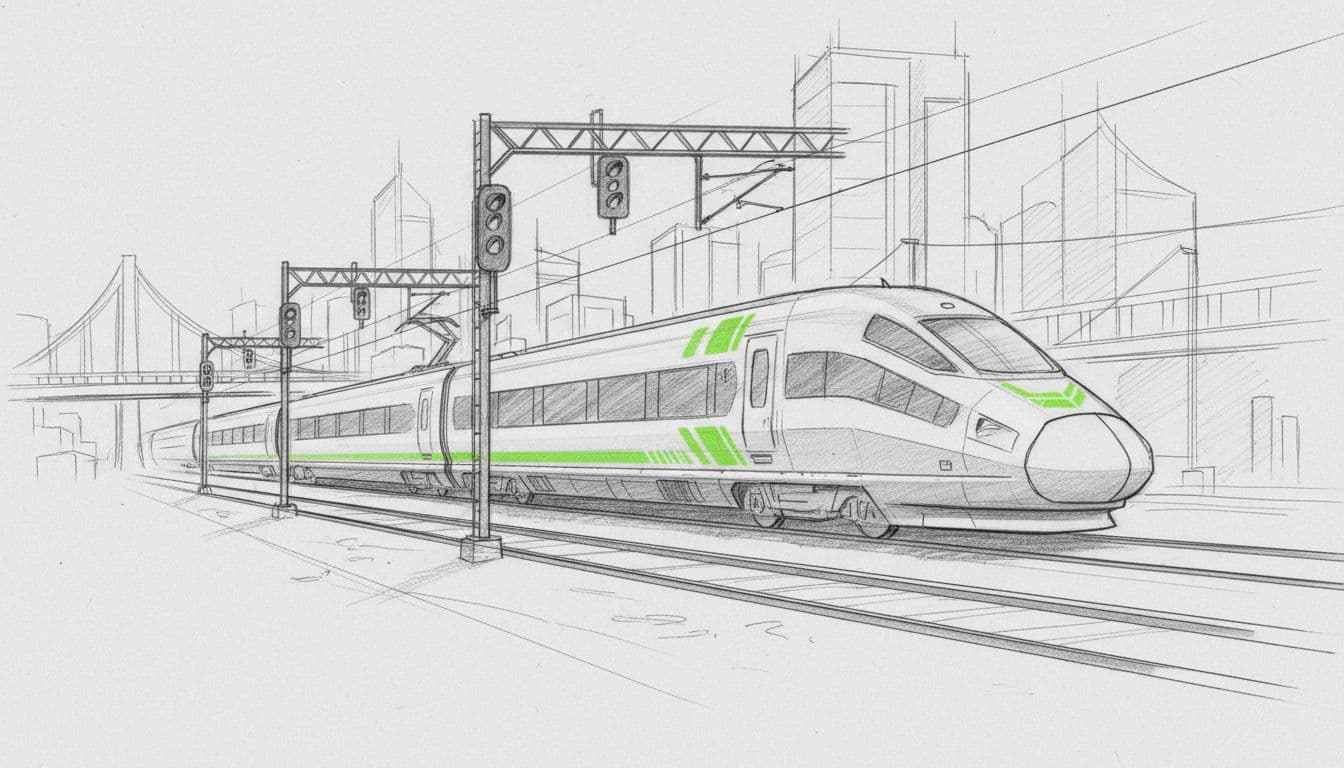
Because these are long-cycle programs, investors usually watch a few simple indicators:
- Order intake and backlog: Are new orders replacing what's being delivered?
- Delivery pace: Are milestone shipments happening on time?
- Warranty and quality costs: Do early units have issues that trigger extra spending?
- Project mix: Are higher-value systems packages growing, or is it mostly basic rolling stock?
Margins can improve when the company standardizes platforms, builds at scale, and reduces rework. On the other hand, input cost inflation (steel, components), late deliveries, and penalties can hit profitability fast. Rail isn't "slow" because people work slowly, it's slow because approvals, testing, and acceptance are strict.
We also need to remember who pays. Rail bills get paid by public operators and governments, which can be stable, but procurement timing can shift with budgets and election cycles.
Defense business: why K2 and export headlines move 064350.KS fast
Defense is where Hyundai Rotem can look like a different company. The key is that exports can change earnings expectations quickly, even if deliveries take time.
At a high level, Hyundai Rotem is known for ground systems (most investors talk about the K2 tank first). When an export opportunity becomes a firm order, markets often update their "how big can this get?" view in a single day. That's why we see sharp moves around defense headlines.
This is also where the K-theme effect shows up. Korea's market has a strong retail base, and defense momentum can attract short-term money. Price action can get noisy when the crowd treats memorandums of understanding as final contracts. We should separate "talking" from "signing," then separate signing from shipping.
A fair comparison question we hear is: why do some investors prefer Korean defense makers over US primes? Often it comes down to a few perceptions:
- Delivery timelines can look faster for certain categories.
- Pricing can be competitive for buyers with budget pressure.
- Integrated supply chains inside Korea can support ramp-ups.
- Export momentum has been strong in recent years.
Still, US primes often have deeper sustainment networks and long-established alliances. So we should treat "K-defense vs US defense" as a trade-off, not a victory lap. For a simple example of how local media can amplify short-term moves, see coverage like Maeil Business Newspaper's Hyundai Rotem stock move recap.
The bull case and bear case in one page, using real-world drivers we can track
Hyundai Rotem is not a "set it and forget it" stock. We do better when we track a short list of drivers and stay honest when they shift.
Here's a one-page map we can revisit each quarter:
| Bull case (what goes right) | Bear case (what goes wrong) |
|---|---|
| Order intake stays strong, backlog expands | Orders slow, backlog peaks, expectations reset |
| Defense exports convert from headlines to firm deliveries | MOUs fade, approvals delay, or budgets tighten |
| Delivery pace improves, fewer schedule slips | Delays trigger penalties and higher rework costs |
| Margin trend improves with better mix and scale | Low-margin batches and provisions compress margins |
| KRW moves don't hurt too much, costs stay manageable | FX and input costs squeeze profits |
| Working capital stays controlled, cash collection is steady | Receivables rise, cash flow lags earnings |
The key is that most of these are trackable. We don't need perfect forecasting. We just need a repeatable checklist.
If we can't point to order, margin, and cash signals that support the story, we shouldn't pay up for the story.
Bull case: backlog conversion, export wins, and operating leverage
When we say "operating leverage," we mean a simple thing: fixed costs get spread across more deliveries, so profits can rise faster than sales once factories run hotter.
What would we want to verify over time?
- New orders stay frequent across rail and defense, not just one-off spikes.
- Backlog converts to deliveries without major schedule resets.
- Gross margin improves as the mix shifts to better programs.
- Cash collection stays stable, with receivables not ballooning.
- Capacity utilization rises, showing real throughput gains.
- Fewer one-time provisions, which signals tighter execution.
If we see two or three quarters of margin improvement plus clean cash conversion, we'd consider moving from NEUTRAL to a more positive rating. Until then, we treat strength as tradable, not permanent.
For investors who like valuation snapshots and analyst ranges, a reference point is Simply Wall St's Hyundai Rotem page. We use it as context, then we verify the important items ourselves.
Bear case: execution risk, project loss provisions, and theme unwind
The bear case is less about "bad products" and more about project math. Big contracts can flip from profit to pain if costs jump or schedules slip. That usually shows up as loss provisions or weak margins in a quarter that surprises the market.
A second risk is the classic Korea pattern: theme unwind. Retail money can rush in during hot defense news, then profit-taking hits when the next catalyst is weeks away. Even good companies can drop hard in that setup.
What would trigger a downgrade for us?
- Margin compression that management can't explain clearly.
- Cancellations or delivery delays that push revenue far out.
- Rising receivables that hint at slower cash collection.
- Weaker guidance language or more cautious project commentary.
If those show up together, the stock can re-price quickly, even if backlog still looks large.
Numbers and chart levels beginners can use without overthinking
We don't need a 40-metric dashboard. We need a few numbers that match the story: sales trend, profit trend, backlog signal, and a basic cash reality check.
Below is a mini-dashboard using the latest snapshots available to us as of March 2026 (with one "implied" line derived from the stated growth rate).
First, here's a simple revenue and profit trend view:
| Period | Revenue | Operating profit | Notes |
|---|---|---|---|
| FY2023 (implied from FY2024 +22%) | ~₩3.59T | N/A | Revenue implied from growth rate |
| FY2024 | ₩4.38T | ₩406.9B | Strong growth year |
| Q4 2025 | ₩1.63T | ₩267.5B | Profit up YoY, mix mattered |
Takeaway: revenue growth has been meaningful, and quarterly profit can swing based on project mix.
Next, backlog matters because it's the "fuel tank." Recent reporting points to a total backlog around ₩29.8T, including about ₩10.5T in defense and over ₩6T in rail. We treat backlog as directional, then we confirm updates in filings and earnings materials.
Finally, the cash flow check. We don't have operating cash flow figures in the snapshot above, so we use a rule: over a full year, operating cash flow should not lag net income for long. If it does, working capital may be soaking up cash.
A practical step is to compare net income to operating cash flow when results come out, then ask why they differ.
K-technical setup: 5, 20, 120-day MAs, trend calls, and clean support zones
Korean traders often call the 120-day moving average the "Half-year Life Line." A lot of swing traders use it as a risk line.
We could not obtain official MA values in our March 2026 snapshot, so we're listing rough estimates based on recent closes. Please verify on your charting platform before you trade.
| Indicator (rough, early March 2026) | Level (KRW) | Level (USD) |
|---|---|---|
| 5-day MA (estimate) | ~₩219,000 | ~$150 |
| 20-day MA (estimate) | ~₩200,000 to ₩210,000 | ~$137 to $143 |
| 120-day MA (estimate) | ~₩150,000 to ₩180,000 | ~$102 to $123 |
How we read it:
- If 5 > 20 > 120, trend is usually up.
- If price loses the 120-day line and can't recover, risk rises.
For support and resistance, we keep it simple and use obvious zones:
- Near-term support: around ₩210,000 (about $143), because price recently traded there.
- Next support: around ₩200,000 (about $137), a common round-number magnet.
- Resistance zone: near ₩249,500 (about $170), the 52-week high.
Levels are for risk control, not prediction. They help us decide when we're wrong.
Investor psychology in Korea: where retail profit-taking often shows up
Korea's market has many active retail traders. That changes how price behaves, especially in defense-linked names.
We often see profit-taking show up in three places:
- Round numbers (₩200,000, ₩250,000), because they're easy reference points.
- Prior highs, because early buyers want to "sell the retest."
- Big news days, because traders buy the rumor and sell the headline.
A beginner-friendly plan can be boring, and that's good:
- Entry trigger: buy only after a quiet consolidation holds above a key MA or support.
- First trim zone: near a prior swing high, where supply often appears.
- Stop level: just below the 120-day line (or below the most recent clean support).
Volatility often spikes around defense headlines and earnings. So we size smaller than we think we need, then we add only after the stock proves itself again.
Investor Alert: risks, governance checks, and a simple hedge if the thesis breaks
We don't buy industrial exporters without a risk checklist. Hyundai Rotem can reward patience, but it can punish sloppy risk control.
Risk checklist we should review before buying (contracts, FX, costs, and politics)
Here are the main risks, with one data point to watch for each:
- Project delays: watch delivery schedule updates in earnings and press releases.
- Cost inflation (steel, components): watch gross margin trend and cost commentary.
- FX sensitivity: track KRW moves and how management discusses hedging.
- Customer budget changes: watch government procurement plans and rail capex.
- Export approvals: track whether deals move from talks to signed contracts.
- Geopolitics: watch for regional tensions that change delivery timing.
- Warranty and quality issues: watch provisions and service costs.
- Working capital spikes: watch receivables and inventory growth versus sales.
- One-off provisions: watch "project loss" language in results.
If two or more of these flash red at once, we slow down and demand a better entry price.
Governance and overhang: what can cap upside even in a strong story
Overhang is simple: it's future supply that can hit the stock, like potential selling by large holders or a capital raise that increases share count. Even with strong fundamentals, extra supply can cap rallies.
What we can verify:
- Ownership structure and major holders
- Related-party transactions that might affect pricing or terms
- Capital raise history and any hints of funding needs
- Large contract disclosures and revisions that change expected profit
In Korea, the fastest way to confirm changes is to check official filings on DART (Financial Supervisory Service). A quick routine helps:
- Search the company name (현대로템).
- Open the most recent filings.
- Look for order announcements, revisions, provisions, and guidance language changes.
If our thesis breaks because defense sentiment unwinds, we can hedge by rotating into something with different drivers. For US-based portfolios, a simple "shock absorber" can be a dividend-focused fund like SCHD's fund profile (lower volatility profile than a single defense exporter). The point isn't perfection, it's staying in the game.
Conclusion
We keep Hyundai Rotem (064350.KS) at NEUTRAL in March 2026 because backlog strength is real, but execution and theme swings can move the stock faster than fundamentals. The single most important near-term indicator we'll track is order intake plus margin trend, since that tells us whether backlog converts into quality earnings. If margins improve for a few quarters while cash collection stays healthy, our stance can turn more positive. For beginners, the action plan is simple: keep it on a watchlist, set alerts near ₩210,000 ($143) and ₩200,000 ($137), then review the next earnings release and fresh updates on DART before committing real size.
https://www.seoulstockalpha.com/
Related: Amorepacific Corporation (090430.KS): A Beginner-Friendly Stock Guide (March 2026), LIG Nex1 (079550.KS) Stock Snapshot for Beginners: Theme, Technicals, and Risks (March 2026), Woori Financial Group (316140.KS): A Beginner-Friendly Look at Korea's Shareholder-Return Bank.
Originally published on SeoulStockAlpha.