Verdict: NEUTRAL. We like the strong uptrend and the clear push for shareholder returns, but we also respect the usual bank risks (credit, rates, regulation) and we don't have fully confirmed moving average values in our dataset.
Woori Financial Group Inc. (316140.KS) trades on Korea's KOSPI, and the ".KS" ticker format is what you'll see on Yahoo Finance and TradingView for KOSPI stocks. As of March 9, 2026, the latest known price we're working with is 32,100 KRW. For a US-dollar view, we can translate KRW to USD, but your final number will depend on your live KRW per USD rate when you check.
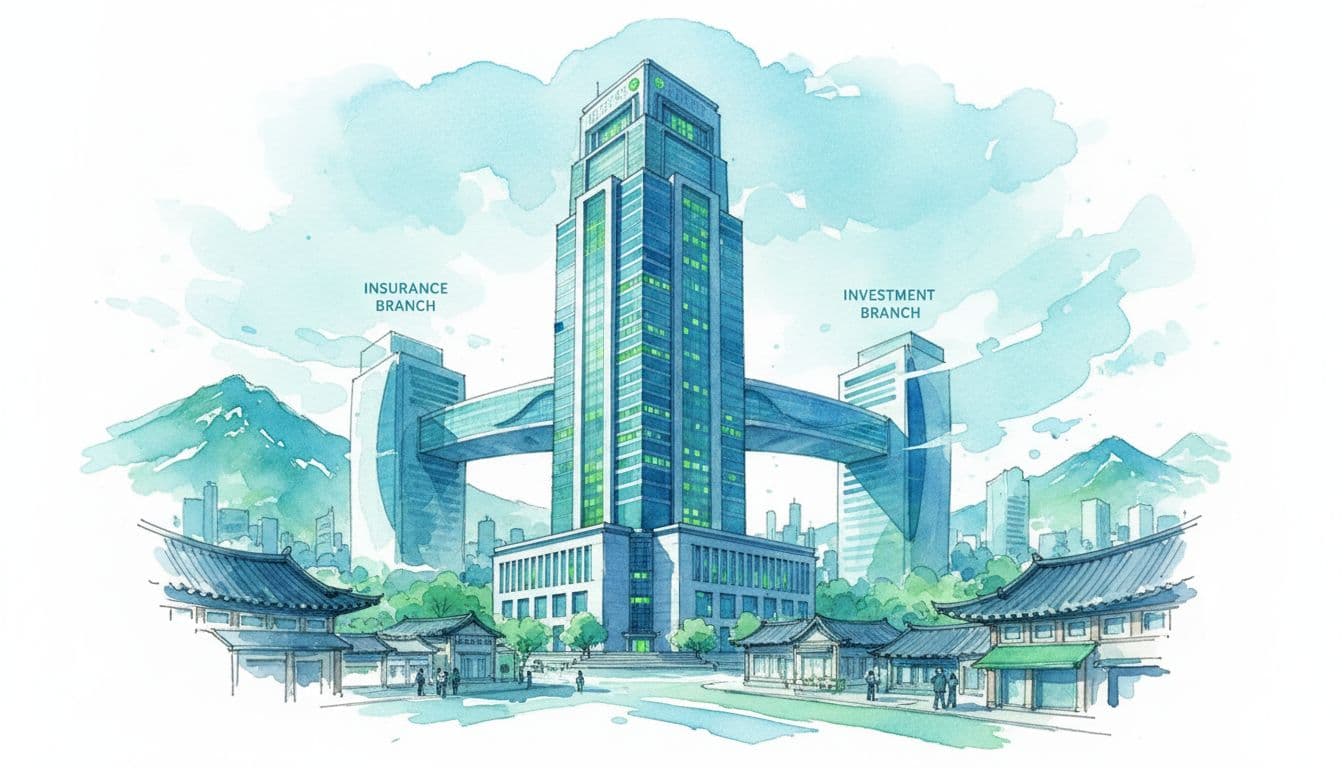
At a high level, Woori is a Korean financial holding company. Woori Bank sits at the center, supported by insurance and other fee-based businesses. Think of it like a busy train station, deposits and customers flow in, loans, investments, and services flow out.
https://www.youtube.com/watch?v=qCLt5-chPdA
What Woori Financial Group does, and where it sits in Korea's finance value chain
Banks can feel simple on the surface. People deposit money, the bank lends it out, and the spread becomes profit. In practice, a large bank holding company also runs a multi-lane business: retail deposits, corporate loans, credit cards, wealth products, and insurance.
Woori's value chain position is mid-to-upper in Korea's finance system because it acts as a hub. It gathers funding (deposits and wholesale funding), prices risk, then allocates capital to households and companies. When the economy heats up, that hub can spin faster. When growth slows, the same hub has to manage defaults and cautious borrowers.
At the group level, we can think in "core" and "satellites":
- The core engine is Woori Bank (lending, deposits, payments).
- The satellites include insurance operations (commonly discussed in the market as Tongyang Life Insurance and ABL Life Insurance) and other non-bank lines where fees matter.
- The broader ecosystem can also include securities and wealth platforms, which help diversify earnings (for context on the group's wealth and securities footprint, see Woori Investment & Securities' business overview).
A quick reality check for new investors: banks often look "cheap" on P/E. That doesn't automatically mean they're bargains. A low P/E can also signal that the market expects slower growth, higher loan losses, or tighter rules.
This is why capital matters. A commonly cited capital strength metric is the CET1 ratio, and the figure we've seen referenced for Woori is 12.90%. That cushion helps absorb losses, supports dividends, and reduces stress during credit cycles.
A bank's "product" is risk pricing. When risk rises, cheap valuations can stay cheap for longer than we expect.
How Woori makes money, interest income vs. fee income
Most bank profit starts with net interest income, the difference between what the bank earns on loans and what it pays for funding. Three simple drivers usually explain the swings:
- Loan growth (more earning assets)
- Rates and spreads (pricing power)
- Funding costs (deposit competition and wholesale markets)
Fee income is the second leg of the stool. It includes insurance sales, commissions, wealth products, card fees, and service charges. The important point is stability: fee income can soften the blow when rate tailwinds fade. We've seen a note that fees and commissions rose 12.8% year over year, which is the kind of signal we like because it reduces dependence on rate cycles.
K-Theme angle: policy-driven funds and regional expansion
Korea's market often trades on themes, especially when policy is involved. Two angles that have shown up in recent discussions are (1) participation in a National Growth Fund initiative (described as a first private participant in some commentary), and (2) a regional hiring push tied to the Jeonbuk Financial Hub, linked to insurance capability building.
Policy themes can lift sentiment because they hint at support, partnerships, or preferred growth lanes. The same themes can also create headline risk if political priorities change. For new investors, it helps to treat policy as a tailwind, not a guarantee.
The stock story right now: price level, valuation, and what the market seems to expect
Let's anchor the basics in one place. Woori's recent price has been quoted across sources in the low 30,000 KRW range. We'll use 32,100 KRW (as of March 9, 2026) as our main reference, while noting a prior close cited around 31,550 KRW. That kind of small mismatch is normal when you compare feeds.
The bigger story is the move. Market data we've reviewed describes roughly a 126% gain over the past year. Some screens cite a 52-week high near 41,500 KRW, while other data feeds show different ranges. We don't want to get trapped by a single number. The practical message is simpler: it has already had a big run, and it's below at least one widely cited peak.
Valuation is where banks get interesting. Woori has been quoted around mid-single-digit P/E, roughly 5.2x in one snapshot, and around 6.05x in another. For banks, a low P/E often means the market is pricing in one or more concerns: credit costs, slower loan growth, margin pressure, or regulation.
To cross-check the broader market view, we also look at a simple analyst snapshot. The view we've seen is a BUY consensus, with an average target around 37,270 KRW (from a 20-analyst set in one dataset). If you want a quick place to compare valuation, targets, and analyst counts on one page, Simply Wall St's Woori stock report can be a useful reference point.
Dual currency view: KRW price, then your USD translation
We prefer to keep the math beginner-friendly:
- Price in KRW: 32,100 KRW
- Convert to USD: KRW price ÷ (KRW per USD)
If your live rate is around 1 USD = 1,370 KRW, then 32,100 KRW is about $23.40 (32,100 ÷ 1,370). Since FX moves daily, we don't treat that USD number as fixed. We treat it as a way to sanity-check what we're paying in our home currency.
Shareholder returns: dividends and buybacks are a big part of the thesis

For many Korean bank stocks, a big slice of the total return comes from payouts. In Woori's case, the shareholder return message has been strong:
- A board-approved year-end dividend of 760 KRW for 2025
- A total 2025 dividend of 1,360 KRW per share
- A cited yield around 4.4% (yield changes with the share price)
- A share buyback and cancellation plan described as 200 billion KRW in the first half of 2026, plus 150 billion KRW later
- A stated direction toward a 50% shareholder return aim
Why does this matter? Dividends put cash back in our pocket. Buybacks can reduce share count, which can support per-share metrics. Just as important, cancellations signal the company isn't only "recycling" treasury shares.
The catch is also simple: banks don't control the cycle. If profits drop or regulators push caution, payouts can shrink. For a quick news-style recap of the dividend increase theme, this dividend-focused update provides additional context.
Governance and overhang: what could cap the upside after a big run
"Overhang" just means something that can limit upside because it creates future selling pressure or constraints. We're not pointing to a specific scandal here. Still, bank stocks often carry recurring overhang risks:
- rule changes (capital, lending limits, consumer protection),
- shifts in political pressure on pricing and fees,
- sudden sentiment moves when macro data turns.
After a 100% plus run, another dynamic shows up: expectations get higher. Even good news can be "already priced in," so the stock may need bigger surprises to keep climbing.
Our K-Stock checklist: technical levels, retail psychology, risks, and a simple hedge plan
Woori has shown a strong trend over the past year, but recent action looks more balanced. One technical snapshot we've seen places the RSI around 49.11, which is neutral. That fits a stock that has cooled off after a major run. We've also seen references to a sharp down day of about 4.5%, which is a reminder that banks can still move fast when headlines hit.
Volatility matters for new investors because it affects behavior. One dataset cites beta around 0.59, which suggests lower volatility than the broad market, but beta doesn't protect us from bank-specific shocks. Credit events and policy headlines can still create gaps.
Retail psychology is often the hidden driver in Korea, especially after a run-up:
- 30,000 KRW can act like a round-number magnet. Traders remember it.
- The prior high zone near 41,500 KRW can become a "memory level." People who bought near the top may sell when price returns.
These are behavioral zones, not magic lines. Still, they help us plan entries and exits without emotion.
Technical snapshot we can actually use (with a moving average table)
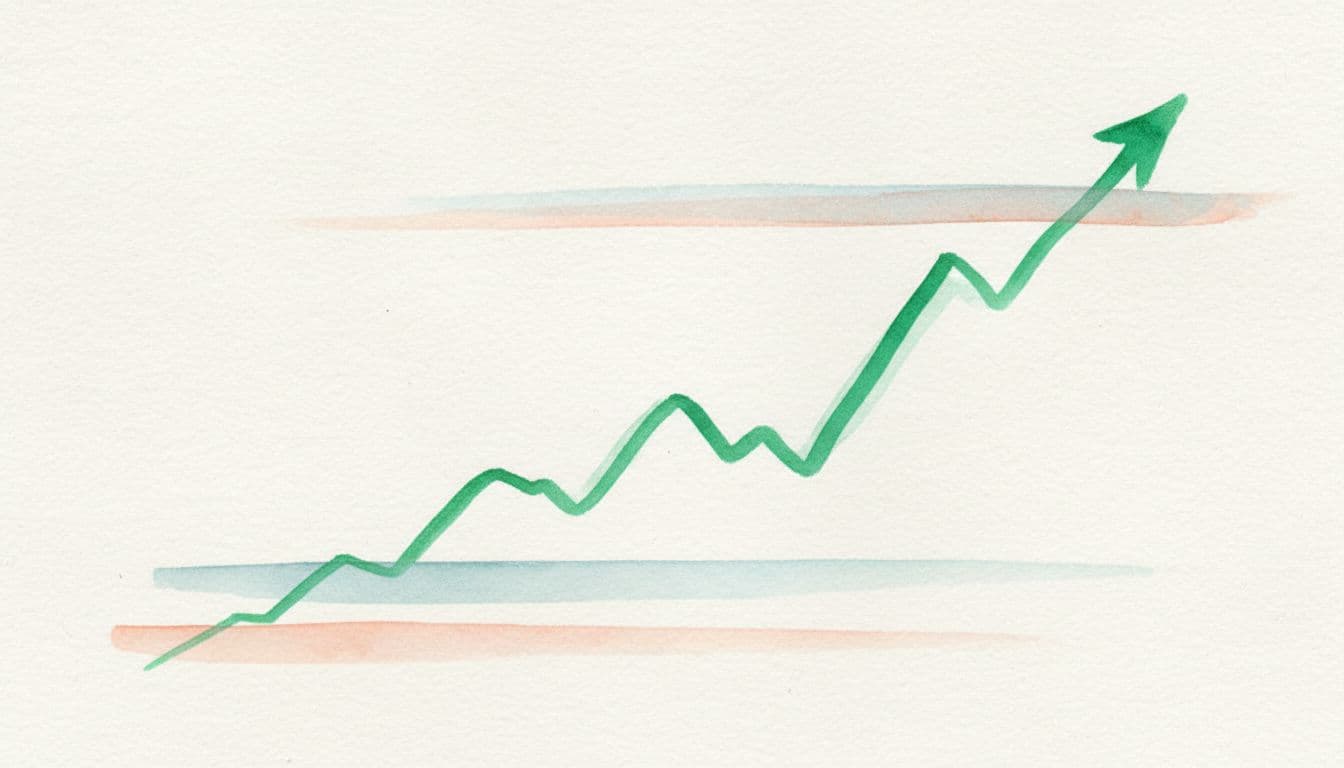
Because exact SMA values weren't provided in our dataset, we treat the moving averages below as reader-calculated from your chart app (TradingView, Yahoo Finance, or your Korean broker chart). What matters most is the process and what we do with the signal.
Here's the compact checklist we use:
| Indicator | What it means | How we use it |
|---|---|---|
| 5-day MA (reader-calculated) | Very short-term momentum | If price stays above it, momentum is intact, if it breaks often, trend is choppy |
| 20-day MA (reader-calculated) | One-month trend for many traders | We like pullbacks that hold this line during healthy uptrends |
| 120-day MA (Half-year life line, reader-calculated) | Korea's "half-year life line" | Above it, we stay constructive; below it, we tighten risk and avoid averaging down |
| RSI (around 49) | Momentum temperature | Near 50 is neutral, it can reset after big rallies |
| Support and resistance zones | Where buyers or sellers clustered before | We mark recent swing lows and high-volume areas, then plan around them |
Instead of relying on pre-made Fibonacci numbers from mixed feeds, we mark support using recent swing lows on the daily chart and high-volume zones where price paused before. That method travels well across brokers because it uses the market's own footprints.
Investor Alert: Risks to Consider, plus a simple hedge if the trend breaks
Bank investing often looks calm, until it doesn't. These are the main risks we keep on our screen:
- Credit costs rise: more delinquencies mean higher provisions and lower earnings.
- Net interest margin pressure: funding gets expensive, or loan pricing weakens.
- Higher expenses: a cited SG&A ratio around 53.6% rising can squeeze operating leverage.
- Policy and regulation shifts: lending rules and capital expectations can change quickly.
- Slower Korea economy: weaker demand can slow loan growth and lift defaults.
- Post-rally volatility: after a 100% plus run, profit-taking can accelerate.
- Capital actions under stress: if conditions worsen, banks may prioritize buffers over payouts.
Our hedge plan stays simple and rules-based. First, we size positions so we can sleep at night. Next, we set a trend rule tied to the 120-day "half-year life line". If the stock loses that line and can't recover, we reduce exposure instead of hoping. Finally, if banks weaken as a group, we consider rotating part of our Korea exposure into steadier areas like utilities or telecom, or a high-dividend segment, rather than forcing a rebound trade in the same theme.
If you're newer to Korea trading tools, it can also help to understand how local brokers and research flow works. A large player like Samsung Securities shows the type of platform and product menu that shapes retail behavior in Korea.
Conclusion: why we stay NEUTRAL on 316140.KS for now
We rate Woori Financial Group (316140.KS) NEUTRAL today because the shareholder return story and the capital backdrop look supportive, yet the bank cycle still controls the mood. The bull case is easy to see: buybacks and dividends can support total returns, and the valuation sits in mid-single-digit P/E territory. On the other hand, we keep watching credit costs and whether price holds above the 120-day half-year life line.
Before we buy, we run a simple checklist: check the live FX rate for your USD view, confirm the dividend schedule with your broker, calculate the 5/20/120-day MAs on your chart, then decide your risk limit in advance. If we can do that, we can hold a bank stock without letting headlines drive our actions.
https://www.seoulstockalpha.com/
Related: Amorepacific Corporation (090430.KS): A Beginner-Friendly Stock Guide (March 2026), Hyundai Rotem (064350.KS) Stock Snapshot: Backlog Power, Headline Volatility, and a Beginner-Friendly Plan, Hana Financial (086790.KS) Stock Outlook for March 2026: Valuation, Dividend, and Key Price Levels.
Originally published on SeoulStockAlpha.