Executive Summary: [NEUTRAL]. At around ₩130,400 to ₩134,000 per share (about $89) in early March 2026, Amorepacific looks like a solid global K-beauty franchise, but it still trades like a "story stock" tied to overseas demand swings. We like the brand portfolio and the push into the US and Europe, yet we'd rather buy on clear pullbacks than chase strength.
Amorepacific Corporation is listed in Korea as 090430, and you'll often see it written as 090430.KS on Yahoo Finance or TradingView. The ".KS" suffix is simply the exchange code for KOSPI listings on those global charting platforms.
What we're buying when we buy Amorepacific (090430.KS)
.png "Illustrative image for blog post 'Amorepacific Corporation (090430.KS): A Beginner-Friendly Stock Guide (March 2026)' related to Amorepacific Corporation (090430.KS)")
Amorepacific is not an ETF. It's an individual operating company, and it sits near the top of Korea's cosmetics value chain. In plain terms, it creates beauty brands, manufactures products (directly or through partners), and sells through a mix of channels: department stores, online, and travel retail (duty-free).
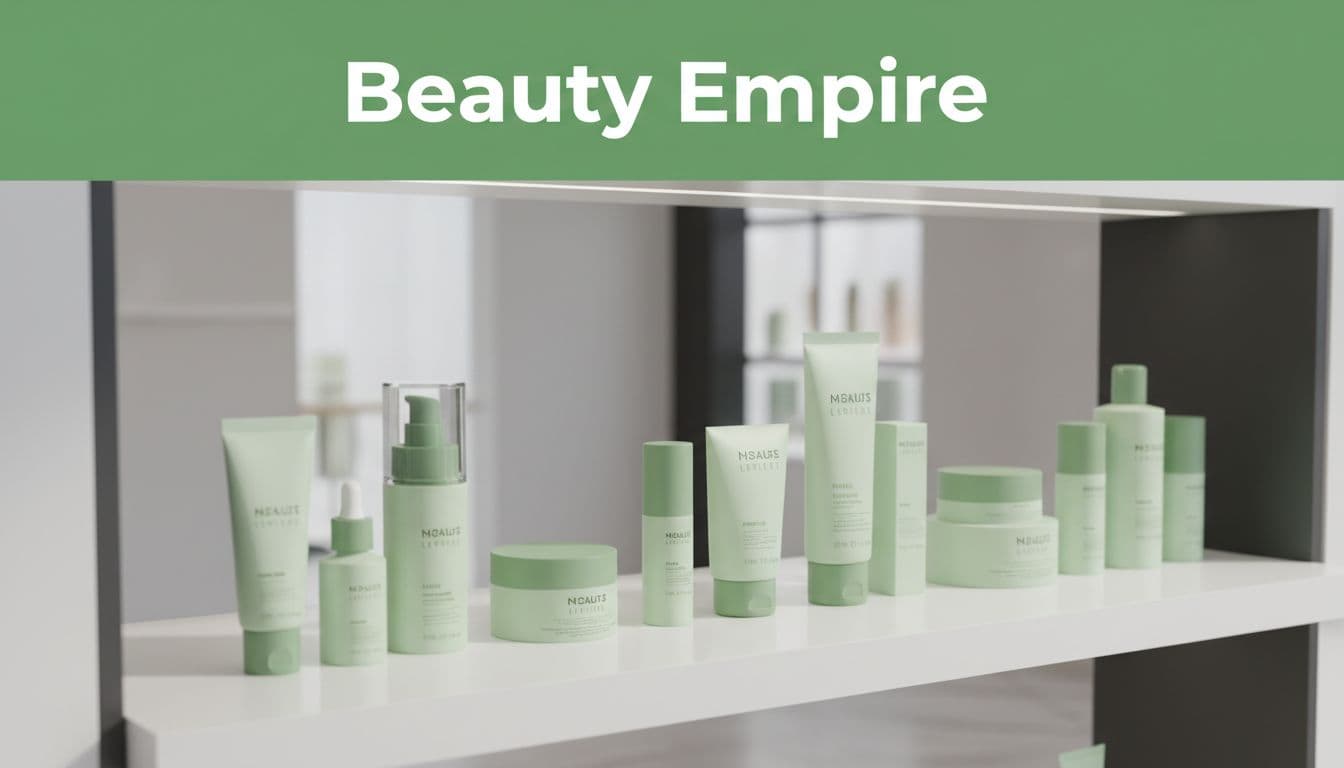
What makes the company easier to understand is that it's not a one-brand bet. The group owns multiple well-known brands, including Laneige, Innisfree, Hera, and COSRX. Think of it like a "beauty shelf" that can be rearranged when consumer tastes change. If one line cools off, another can take the spotlight.
From a value chain view, we usually bucket Amorepacific into three earnings drivers:
- Brand power (pricing): Premium skincare can hold margins when demand is steady.
- Channel mix (where it sells): Department stores and global e-commerce often beat low-margin discount channels.
- Geographic mix (where growth comes from): The company has been working to reduce over-reliance on China by building the Americas and EMEA.
For quick reference on the listing and basic figures, we often start with a clean snapshot like Amorepacific's stock overview page.
March 2026 snapshot: price, valuation, and the chart story
In early March 2026, Amorepacific traded around ₩130,400 to ₩134,000 (roughly $88 to $90). (USD is a simple conversion estimate, and it moves with the KRWUSD exchange rate.) The company also has a preferred share class, 090435, which trades at a much lower price. Beginners should avoid mixing them up because the liquidity and behavior can differ.
Here's a simple dashboard view using the latest available figures we have for March 2026:
| Item | What we're watching (March 2026) |
|---|---|
| Common share price (090430.KS) | ₩130,400 to ₩134,000 (about $89) |
| Market value | About $6.12B |
| 2025 performance | +19.69% (after a weak 2024) |
| 2026 YTD performance | About +7.38% |
| Forward valuation (est.) | About 25.3x 2025E EPS, 20.6x 2026E EPS |
| Street view | "BUY" consensus (26 analysts), targets around ₩159,192 to ₩169,333 (about $106 to $113) |
Two calendar items also matter for short-term volatility: the Annual General Meeting on March 26, 2026, and Q1 2026 earnings on May 5. Stocks like this often drift, then jump, because investors re-price the next quarter quickly.

If we want a quick sense of "how big it is," market cap gives context for risk and liquidity. A handy reference is Amorepacific's market cap history.
K-beauty theme, volatility, and retail investor psychology
Amorepacific trades with the K-beauty theme, and themes behave like tides. When global consumers crave Korean skincare, sales and margins can surprise on the upside. When that buzz fades, multiples compress fast, even if the company is still profitable.
That's why we treat 090430.KS as a mix of brand business and sentiment chart. Beginners often ask, "Isn't beauty defensive?" In the US, big beauty can look stable. In Korea, K-beauty names can still swing like growth stocks because overseas demand, channel trends, and social media momentum all matter.
Retail investor behavior is part of the chart too. In our experience, profit-taking often clusters around round-number levels and recent highs:
- ₩145,000 to ₩146,000: Near the prior visible high zone mentioned by market commentators.
- ₩150,000: A clean psychological level, often a first take-profit area.
- ₩160,000 to ₩170,000: Close to the average analyst target band, where "good news" can get fully priced.
On the flip side, if price slips, many buyers look for "comfortable" re-entry levels such as prior consolidation zones (often ₩120,000s if the market revisits them). We don't treat these as guarantees. We treat them like crowded exits and entrances in a stadium. People move together, so price reacts.
Governance, overhangs, and the China question
Not every risk shows up in a product review. With Amorepacific, the biggest overhang has historically been regional concentration, especially China. Political and consumer shifts can hit sales quickly, and the market remembers that pain. The company's answer has been diversification, with stronger focus on North America and Europe.
We also watch "one-time" items because they affect trust in the earnings path. In 2025, net income was pressured by restructuring costs tied to a voluntary retirement program. Even when those charges are non-recurring, they can still weigh on sentiment for a few quarters.
Competition is another quieter overhang. Korea's beauty space keeps minting new winners, and market cap leadership can rotate. That doesn't mean Amorepacific loses its moat overnight, but it does mean we should demand proof in the numbers, especially overseas growth and margin control.
For a feel of how traders think about entry points after big moves, this discussion is a useful example: timing questions around Amorepacific shares.
Investor Alert: Risks to Consider

If we buy Amorepacific, we're also buying exposure to changing overseas demand and to K-beauty sentiment, not just to "steady soap-and-skincare" consumption.
Key risks we keep front and center:
- Theme risk: If K-beauty cools globally, multiples can shrink even with decent sales.
- China shock risk: Any fresh policy or demand hit can return quickly.
- Margin pressure: Promotions, channel shifts, and higher marketing spend can cap profits.
- Execution risk in the US and Europe: Growth is great, but distribution and brand building cost money.
- Event volatility: Earnings days can re-price expectations in minutes.
Because of these, we size positions conservatively. For newbies, that often matters more than picking the "perfect" entry.
If it drops: simple hedges and "rebound" ideas
When a single consumer brand stock falls, we like to hedge by pairing it with something that tends to hold up when sentiment weakens. Two simple approaches are common:
First, we can balance with a broad Korea index exposure (KOSPI-style large caps). That reduces single-name risk.
Second, we can pair with a less theme-driven sector. If K-beauty sells off on sentiment, Korean banks, utilities, or defense sometimes act like shock absorbers because their drivers differ.
If we want a "rebound cousin" inside consumption, we can also watch Korean food and beverage names. They often ride a different demand cycle than cosmetics, especially when promotions get heavy in beauty.
None of these are perfect hedges. Still, they can keep one bad week from turning into a bad year.
Conclusion
Amorepacific (090430.KS) remains one of the cleanest ways to get K-beauty exposure through a single Korean stock. In March 2026, the setup looks promising, but not easy. We see upside if overseas growth stays strong and margins improve, yet we respect the volatility tied to sentiment and China headlines. If we're building a beginner portfolio, we'd keep a NEUTRAL stance, then upgrade only after either a pullback to calmer levels or clear earnings follow-through.
https://www.seoulstockalpha.com/
Related: Mirae Asset Securities (006800.KS) Stock Guide for Beginners (March 2026), Hanwha Systems Co., Ltd. (272210): A Newbie-Friendly Stock Review (March 2026), Hyundai Rotem (064350.KS) Stock Snapshot: Backlog Power, Headline Volatility, and a Beginner-Friendly Plan.
Originally published on SeoulStockAlpha.