If we're new to Korean stocks, Hyundai Engineering & Construction Co.,Ltd. (000720.KS) can look confusing at first. It's not a flashy consumer brand, yet the chart can move like one. That's because construction in Korea often trades as a "theme," not just a slow business.
In this post, we'll keep it practical. We'll cover what the company does, why the stock can swing, the Korea-style moving average setup, and the risk checklist we'd want before buying.
Executive summary (verdict first)
Rating: NEUTRAL (March 2026). We like the long-term story, but we also see enough volatility and headline risk to stay patient on entry.
Here's the quick snapshot we're working with:
- Global ticker format: Hyundai Engineering & Construction Co.,Ltd. (000720.KS). The .KS suffix is commonly used on Yahoo Finance and TradingView for KOSPI stocks (KOSDAQ often uses .KQ).
- Latest close: 61,500 KRW (about $45.70 USD, using ~1,345 KRW per USD).
- Range context: It's below the 52-week high (74,500 KRW), and well above the low (43,100 KRW), so we're not buying "cheap panic," and we're not chasing a breakout either.
- ETF note: This is an individual stock, not an ETF, so project wins and losses can matter a lot.
For broader price context and basic metrics, we usually keep a chart tab open on the 000720.KS quote page on Yahoo Finance.
What Hyundai E&C does (and where it sits in the value chain)
Hyundai E&C is a builder, but "builder" is like calling a smartphone a "phone." The company participates across a wide construction value chain, including civil engineering (roads, bridges), plants and energy facilities, housing and building projects, and overseas infrastructure work.
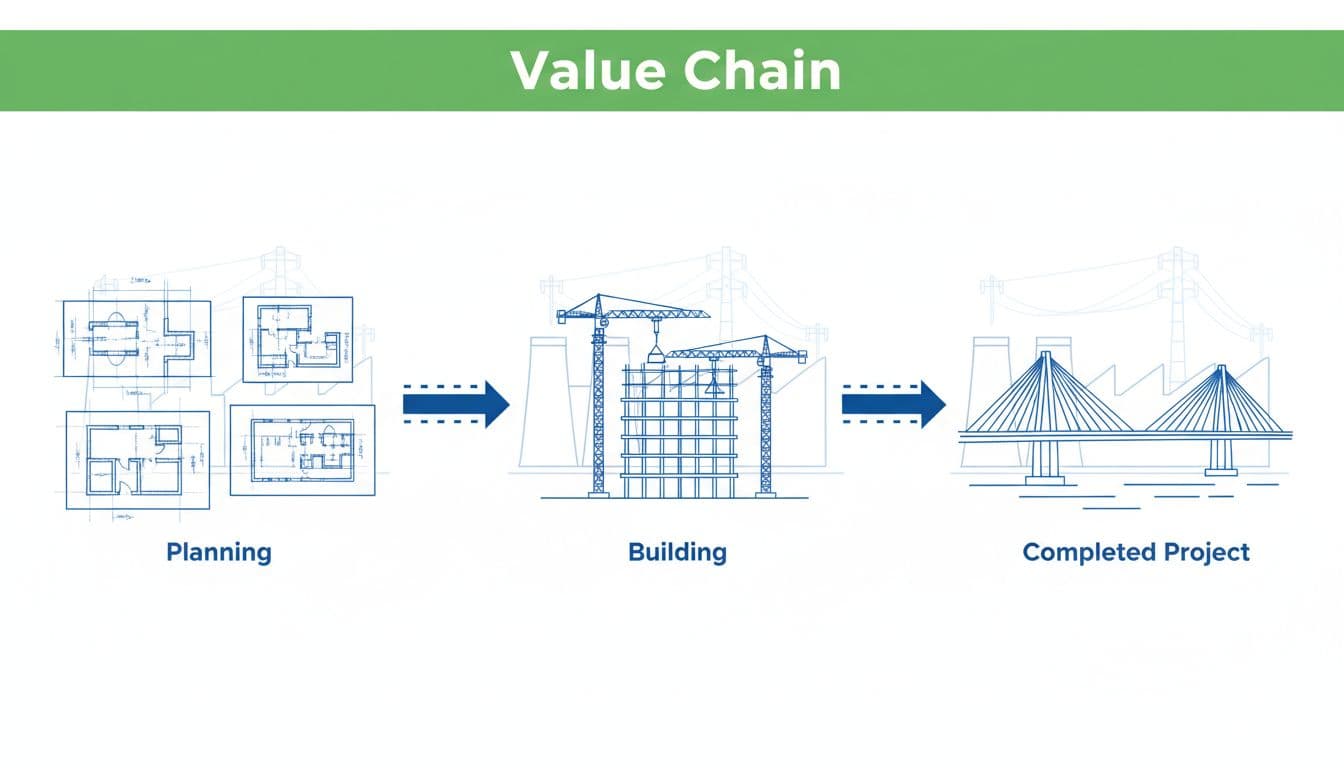
What matters for newbies is how cash flow and risk show up at each stage:
- Early stage (planning, bidding): Margins look great on paper, but timing and terms decide the real profit.
- Build stage (execution): This is where costs can surprise, especially with labor, materials, and weather.
- Finish and handover: Delays can hit profit recognition, and disputes can drag out.
- Operations and maintenance (some projects): More stable, but not always a big portion.
We also keep one mental model: Hyundai E&C can trade like an "energy infrastructure" proxy when nuclear, LNG, or overseas plant headlines heat up. If you want a thematic angle investors have discussed, see this long-form take on Hyundai E&C's energy-focused re-rating narrative.
K-themes and volatility: why 000720.KS doesn't move slowly
Korea construction stocks often behave like a tug-of-war between "rate pressure" and "order momentum." When interest rates feel restrictive, housing sentiment cools and builders can fade. On the other hand, a single overseas order theme can pull the group higher quickly.
In March 2026, the big volatility driver is not just earnings. It's positioning. When a stock runs from a low area (43,100 KRW) and later slips from a high (74,500 KRW), many short-term traders treat the middle zone as a trading range. That's why we watch round numbers and prior peaks.
A simple rule in Korean retail flow: round numbers become "sell targets," especially after a fast rebound.
For Hyundai E&C, we'd expect profit-taking pressure to appear near:
- 60,000 KRW (round number and recent attention level)
- 65,000 KRW (another round-number target)
- 70,000 to 74,500 KRW (prior high zone, where trapped sellers often reappear)
If we want a more "broker style" framing of what investors are watching in 2026 (especially around overseas and nuclear angles), this note headline is a useful reference point: Mirae Asset view on overseas nuclear outcomes in 2026.
K-technical analysis: 5, 20, 120-day moving averages (Half-year Life Line)
Korea traders love moving averages. We do too, but only as a way to describe crowd behavior.
- 5-day MA: short-term mood, often used by active retail traders.
- 20-day MA: one trading month, often used to judge whether a pullback is "normal."
- 120-day MA: in Korea this is often called the "Half-year Life Line", a popular trend filter for medium-term holders.
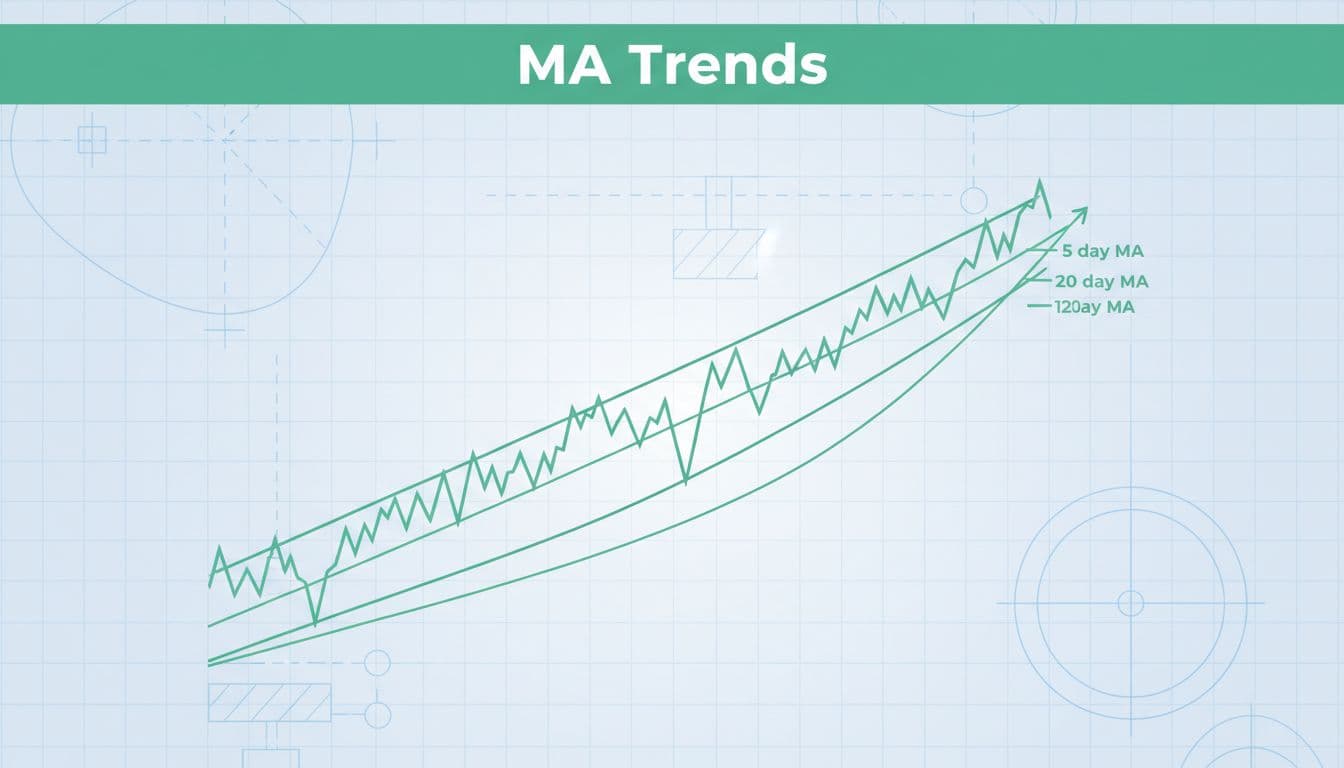
Our real-time snapshot did not include exact moving average values today, so we're not going to invent them. Still, we can set up the checklist we'd use:
One way to track it is with a simple table like this, then fill the numbers from your charting platform:
| Moving Average | What we use it for | Current value (today's snapshot) |
|---|---|---|
| 5-day MA | Short-term momentum and quick exits | N/A (not provided) |
| 20-day MA | Pullback support and trend health | N/A (not provided) |
| 120-day MA ("Half-year Life Line") | Medium-term trend, risk-on vs risk-off | N/A (not provided) |
How we'd read it in plain English: if price holds above the 120-day line, dips often become "buy-the-dip" attempts. If price loses the 120-day line and fails to recover, retail tends to cut positions faster, especially after a big run. For checking these lines, we usually pull up a daily chart on Yahoo Finance's interactive chart for 000720.KS.
Governance, dividends, and overhang: what we'd verify
For beginners, governance can feel abstract. We keep it simple: we look for surprises that can hit the stock even if the business is fine.
From the data we reviewed, we saw:
- Shares outstanding around 112.41 million, suggesting no obvious dilution event in the snapshot.
- Dividend around 600 KRW per share (that's roughly $0.45 USD at ~1,345 KRW per USD).
We did not see specific governance red flags in the pulled notes. Still, construction names can face "overhang" risk from sector headlines: cost overruns, project disputes, or sudden changes in order expectations. If we're holding long-term, we also want to track whether profit stays steady across cycles, not just in one strong quarter.
Investor Alert: Risks to Consider (and a simple hedge idea)
Construction is a business where a small mistake can become a big number. Before we buy 000720.KS, we keep these risks front and center:
- Project execution risk: delays, labor issues, and material costs can damage margins.
- Overseas headline risk: big global projects can boost backlog, but contract terms matter.
- Cycle risk: housing and infrastructure sentiment can flip quickly with rates and policy.
- Stock volatility: the wide multi-year trading range tells us this name can move hard in both directions.
If the stock falls and we still like Korea exposure, we can hedge in a simple way: shift part of the position into a broad Korea index fund (KOSPI-style exposure) or a more defensive sector until the chart stabilizes. In other words, we don't have to "all-in" a single construction name to stay invested.
Reminder: This is educational content, not investment advice. We're sharing the framework we use.
Conclusion
Hyundai Engineering & Construction (000720.KS) sits in a powerful spot in Korea's infrastructure and energy build-out, but the stock often trades on themes and timing, not just fundamentals. At 61,500 KRW ($45.70), we're staying NEUTRAL and waiting for either a cleaner technical setup or clearer order-driven momentum. If we're new, our best edge is patience, plus a strict risk plan. What would make us upgrade to a buy, a bounce off the 120-day "Half-year Life Line," or a strong catalyst that shows up in results?
Related: Yuhan (000100.KS) Stock Snapshot: What We Think in March 2026, NAVER Stock (035420.KS) and the End of AI "Issue Timeline": What It Means for News, Trust, and Investors (March 2026), Rainbow Robotics (277810.KQ): What New K-Stock Investors Should Know in March 2026.
Originally published on SeoulStockAlpha.