When we open a news app, we expect two things at once: speed and fairness. That's why NAVER's decision to end its AI-based "issue timeline" matters more than it sounds. This is not just a UI change. It's a shift in who gets to "set the agenda" on Korea's biggest portal.
For us as Korean stock newbies, it also raises a simple investing question: if NAVER changes how news is curated, does it change the stock story too?
https://www.youtube.com/watch?v=oC2oJWvJydc
Why NAVER is shutting down "Issue Timeline" and switching to "Issue NOW"
NAVER (035420.KS) plans to end its AI-powered "issue timeline" service on October 31. In its place, it will roll out "issue NOW," where media companies select their own issues and articles to present as timelines.

The key difference is control. Under the old model, AI could auto-create topic pages and sort articles based on signals like user reactions. That sounds neutral, but it creates a common complaint: "The algorithm decides what's important, not editors." When social trust is fragile, that complaint can become a political and regulatory headache.
With "issue NOW," each media outlet can curate up to 20 issues. That puts responsibility back on publishers. NAVER has also pointed to strengthening evaluation and oversight, including plans for a new evaluation committee (mentioned during a National Assembly review).
From an investor lens, we read this as risk management. NAVER isn't walking away from AI. It's trying to reduce the perception that AI ranking equals editorial judgment. In other words, NAVER is moving from "AI decides" to "AI supports," while humans take the blame and the credit.
NAVER stock basics for beginners (ticker, price, and why .KS matters)
NAVER's KOSPI ticker is NAVER (035420.KS). The ".KS" suffix is the format used by global charting platforms like Yahoo Finance and TradingView. If a stock is on KOSDAQ, you'll often see ".KQ" instead.
As of March 2026, NAVER has recently traded in the low-220,000 KRW range, and was also quoted around 233,500 KRW, which is about $169.60 using an approximate USD/KRW 1,376.70. (FX moves daily, so our USD number is always an estimate.)
For a quick global reference point, we like checking the live chart and recent headlines on Yahoo Finance's NAVER page.
This news product change does not automatically mean higher profits next quarter. Still, it can affect user time-on-platform, publisher relationships, and policy risk. Those inputs matter for long-term valuation, especially for a platform business where trust is part of the moat.
K-technical analysis: moving averages and retail profit-taking levels
Technical analysis in Korea often feels like traffic signs. It doesn't predict the future, but it shows where crowds may slam the brakes.
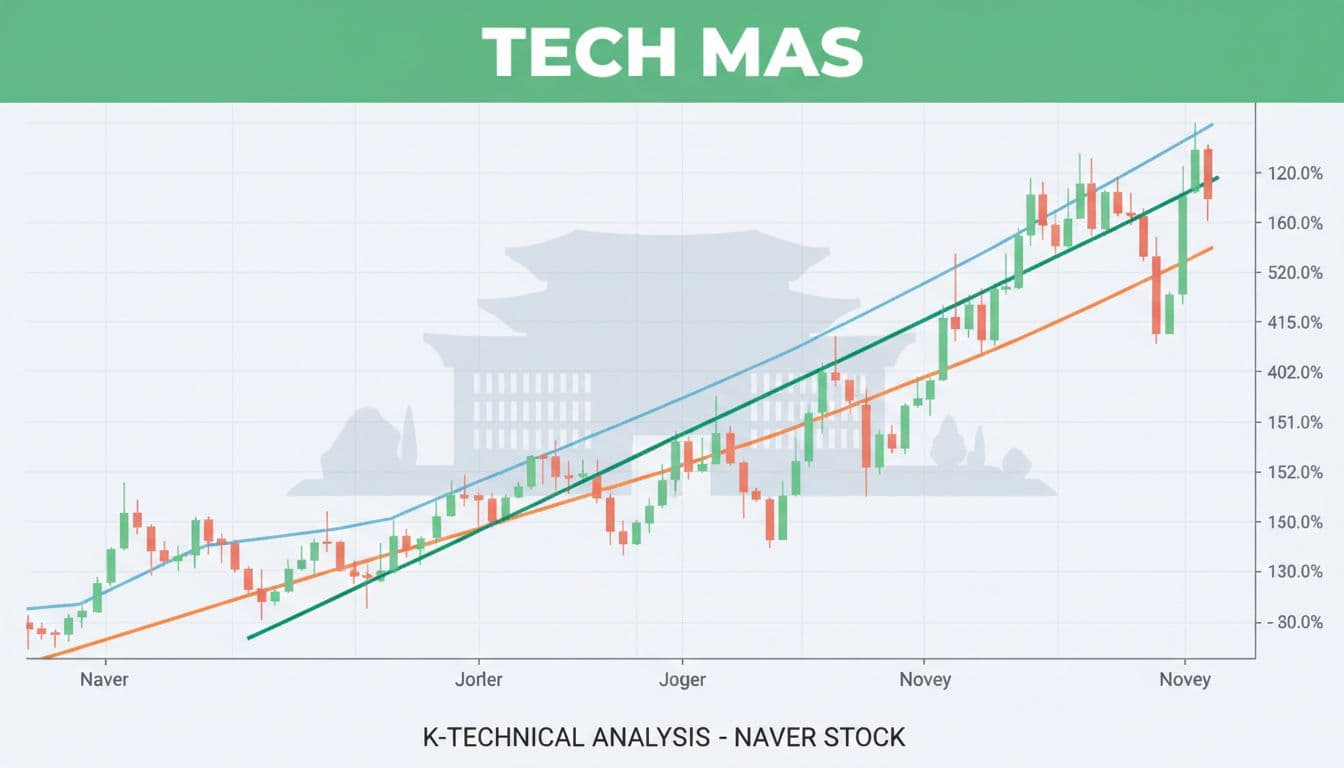
Because exact 5-day, 20-day, and 120-day moving averages were not available in the current dataset, we're using range-based estimates from recent trading quotes. We treat these as "training wheels," then verify on our own chart.
Here's a simple snapshot using March 2026 pricing ranges:
| Metric (Approx.) | KRW | USD (Approx.) |
|---|---|---|
| Last traded area | 233,500 | 169.60 |
| 5-day MA (very short-term) | 220,000 | 159.80 |
| 20-day MA (short-term trend) | 235,000 | 170.70 |
| 120-day MA (Half-year Life Line) | 220,000 to 230,000 | 159.80 to 167.10 |
In Korea, the 120-day moving average is often called the "Half-year Life Line." When price holds above it, sentiment usually feels safer. When price falls below it, retail investors often flip from "buy the dip" to "sell the bounce."
Now, let's talk investor psychology, because this stock has clear memory levels:
Retail profit-taking often clusters where people previously got trapped, then finally "break even."
Based on recent price action history, we watch 260,000 to 280,000 KRW as a common profit-taking zone. We also treat 295,000 KRW as a major "story top," since heavy selling showed up near that area before. On the downside, many traders keep an eye on the 240,000 KRW area as a practical line in the sand, with deeper support closer to the prior 1-year low zone.
If we want to compare how the Street is positioned, we can cross-check consensus-style pages like Investing.com's estimates view for NAVER, then compare that mood to the chart.
Value chain positioning: where NAVER makes money, and why news still matters
NAVER sits at a powerful point in Korea's internet value chain. Search and portal traffic can feed commerce, fintech, and content. That's why a "news tab" decision can spill into broader platform engagement.
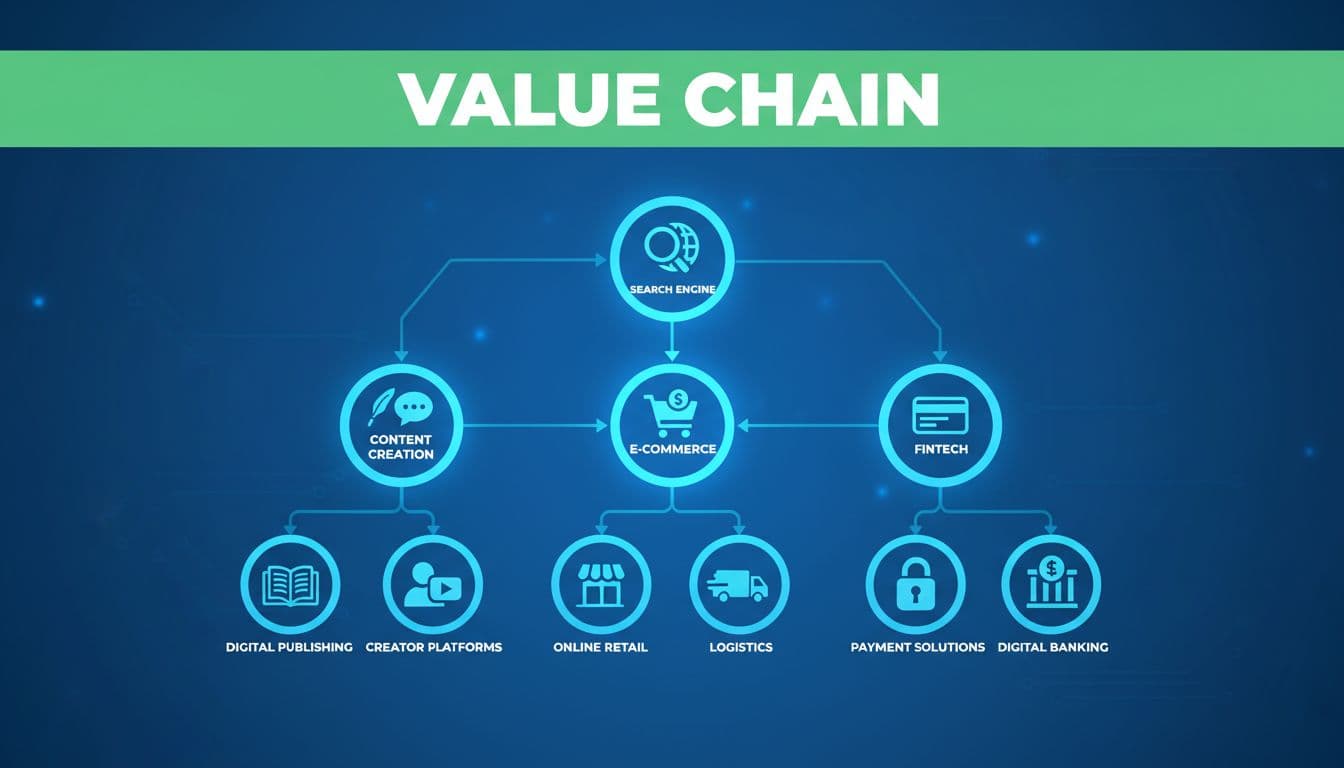
We can think of NAVER's positioning like a busy train station:
- News and search bring foot traffic.
- Content services keep people inside the station longer.
- Shopping and payments monetize the crowd.
So "issue NOW" is not just about headlines. It's about the rules of the station. If publishers feel fairly treated, NAVER lowers conflict risk. If users feel the feed is biased or low-quality, attention can leak away.
For a plain-language business overview and valuation-style snapshots, we sometimes sanity-check third-party summaries like Simply Wall St's NAVER analysis page (we treat it as context, not a final answer).
Governance and overhang: what we watch as shareholders
Current data doesn't flag a major governance scandal. Still, we keep two practical "overhang" ideas on our radar:
First, policy scrutiny can return anytime, because portals influence public opinion. Second, high free float often means price reacts quickly to sentiment swings, since so much stock is actively tradable.
Also, NAVER's dividend yield has been relatively low, so the stock can behave more like a growth name during market stress.
ETF note (important for beginners)
NAVER (035420.KS) is an individual stock, not an ETF. If we don't want single-name risk, we can consider broad Korea equity ETFs (US-listed or Korea-listed) that may include NAVER among large-cap holdings. The trade-off is simple: less NAVER-specific upside, but less NAVER-specific damage.
Investor Alert: Risks to Consider (and a simple hedge idea)
Even strong platforms face "silent risks" that don't show up in one earnings slide.
- Regulatory and political pressure: News ranking and exposure rules can change fast.
- User trust risk: If "issue NOW" feels like publisher promotion, users may disengage.
- Ad cycle risk: Portal ads can slow when the economy weakens.
- AI competition: Search habits are changing, and platform loyalty isn't guaranteed.
If NAVER drops sharply, we like having a "shock absorber." One straightforward hedge approach is pairing NAVER exposure with a different Korea sector that can rebound on separate drivers, such as semiconductors (global capex cycle) or defensive dividend-heavy holdings (rate and stability themes). The goal is not perfection, it's avoiding one single narrative controlling our whole account.
Conclusion
NAVER's move from AI "issue timeline" to editor-led "issue NOW" is a trust and accountability decision, not a small feature update. For investors, it sits at the intersection of platform power, regulation, and user behavior. On the chart, we keep our eyes on the Half-year Life Line (120-day MA) and the retail profit-taking zones that often shape rallies. If we stay honest about risk, and size positions like beginners should, we can learn from NAVER without letting it bully our portfolio.
https://www.seoulstockalpha.com/
Related: LIG Nex1 (079550.KS) Stock Snapshot for Beginners: Theme, Technicals, and Risks (March 2026), Hana Financial (086790.KS) Stock Outlook for March 2026: Valuation, Dividend, and Key Price Levels, AI CHP, AI Semiconductor : Korean Stock Newbies' Guide to the Chips Behind the Boom (March 2026).
Originally published on SeoulStockAlpha.