Rainbow Robotics is a Korean advanced robotics maker that often shows up in the same conversations as humanoids, factory automation, and "AI + hardware" investing. Global investors care because robotics is a long-run theme, and Korean theme stocks can move faster than most US names.
That speed is also why this stock is hard to value. The price can jump on headlines, partnerships, or a single contract rumor, even when current earnings are small. If you're new to KOSDAQ, that mix can feel like trying to price a house during an earthquake.
For global tickers, you'll usually see the format 277810.KQ on Yahoo Finance and TradingView. The ".KQ" tag means it trades on KOSDAQ (not KOSPI).
Using the provided FX rate ($1 = ₩1,465), the latest close in the data pull was ₩756,500 (about $516) as of Mar 9, 2026. This post covers the business basics, what tends to move the stock, and the key risks for new investors.
Executive summary: verdict first, what the company does, and what moves the stock
Rating for new investors: NEUTRAL. Rainbow Robotics has a strong narrative and real engineering roots, but the valuation and volatility leave little room for mistakes.
Rainbow Robotics (277810.KQ) was founded in 2011 in Daejeon, with roots linked to KAIST's HUBO humanoid robot work (a detail often referenced in company profiles and investor discussions). In plain terms, it builds robots that can work around people and inside factories. That includes collaborative robots (cobots), humanoid platforms, quadruped robots, mobile manipulators, and AMRs (autonomous mobile robots). It's not an ETF, it's an individual KOSDAQ-listed stock, so single-name risk is high.
A useful way to think about its position is this: Rainbow aims to be a full system builder, combining hardware, control, and software, instead of being a single-component supplier. That can improve pricing power if it wins repeat deployments, but it also raises execution risk because customers buy outcomes, not parts.
Investors also track strategic-shareholder and partnership headlines closely. Market chatter has often connected Rainbow to Samsung since 2024, with some commentary citing a large stake. Because the exact percentage and terms matter, treat that claim as a filing-check item rather than a slogan.
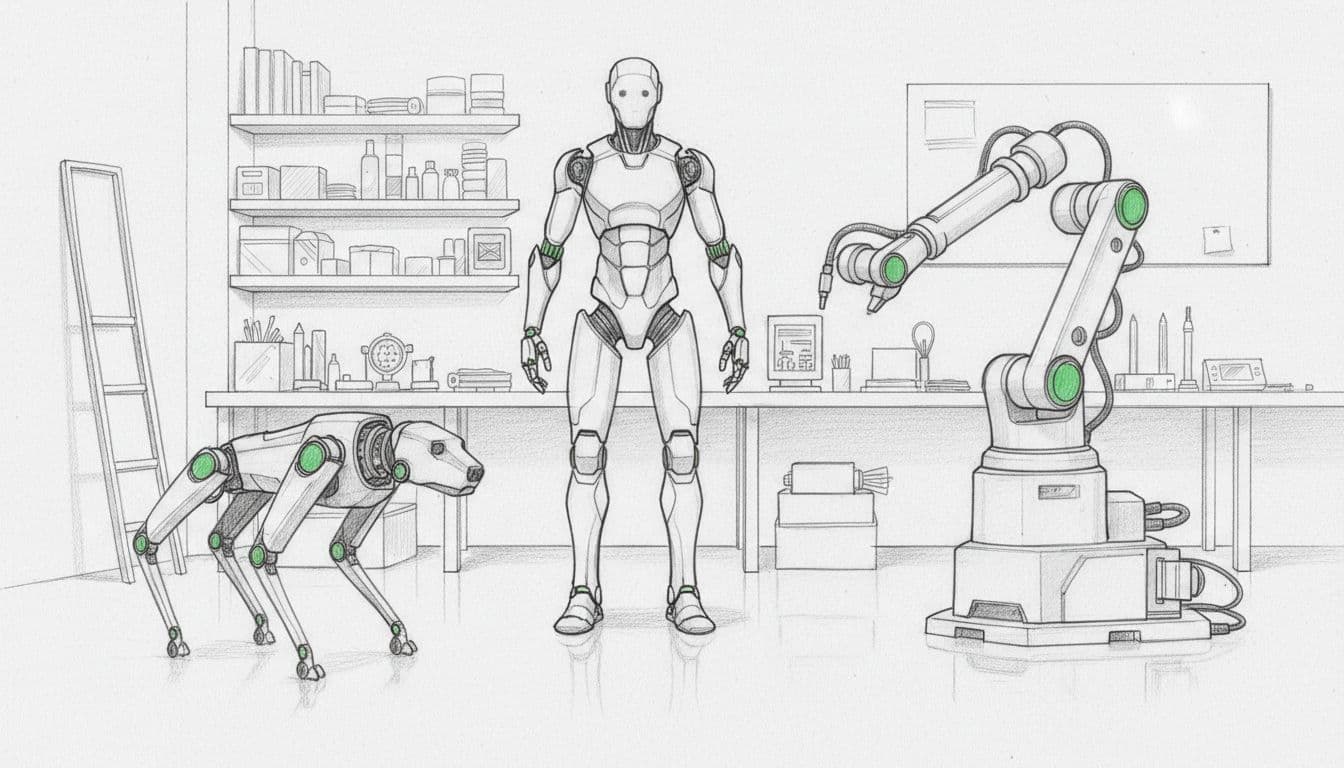
Robotics and AI are a hot Korea theme, so prices often follow the story more than current income statements. For a quick snapshot of the ticker, corporate profile, and recent trading history, use Rainbow Robotics on Yahoo Finance.
What can change the story fast:
- Large commercial orders that look repeatable, not one-off demos
- Export wins that prove global demand and service capability
- Named joint projects with major partners (confirmed in disclosures)
- Evidence of recurring revenue, such as service, upgrades, or fleet expansion
- New disclosures on ownership, lockups, or financing on Korea's DART disclosure system
Where Rainbow Robotics fits in the robotics value chain (and why humanoids are a different bet)
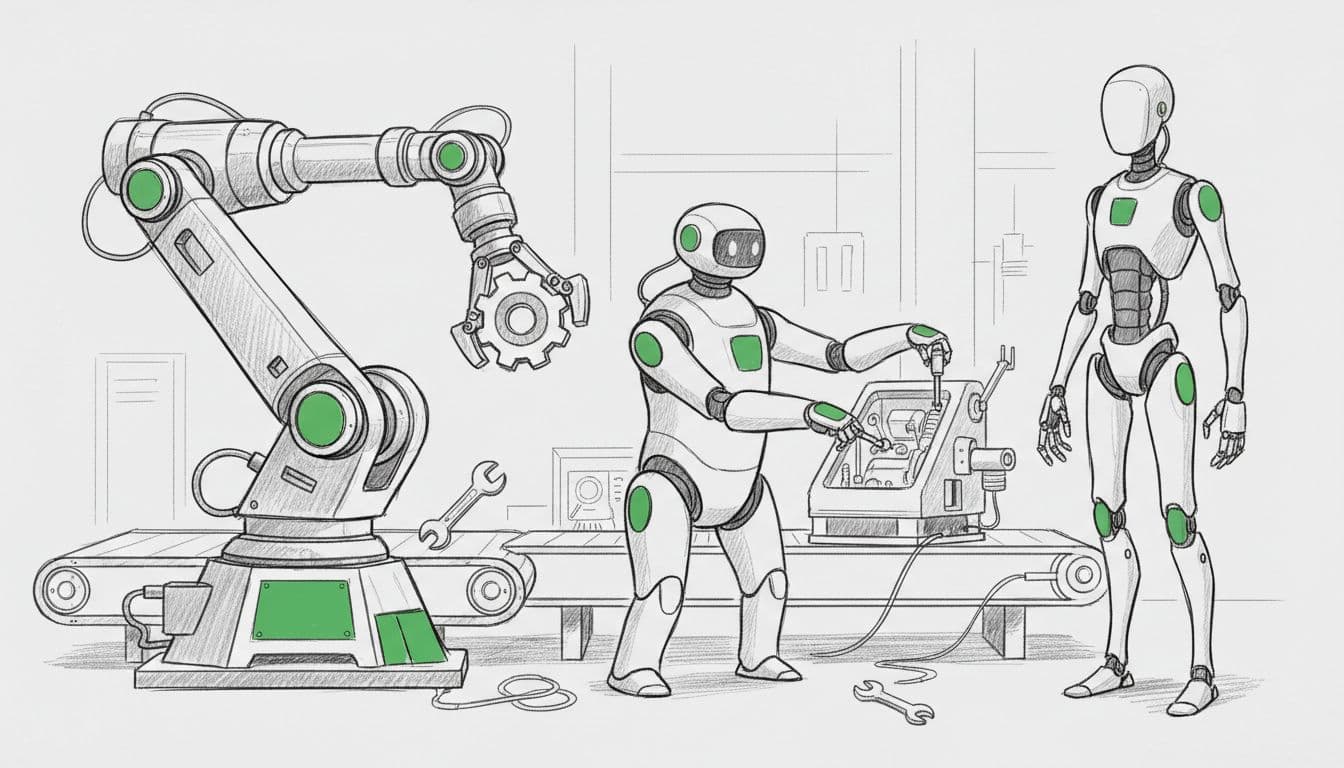
Industrial robots are the classic "caged" arms welding or lifting on a line. Cobots are lighter and meant to work near people, for example assisting an operator with repetitive motion. Humanoids are the sci-fi version: general-purpose bodies that could, in theory, move through human spaces and use human tools.
That last part is the trap for investors. Humanoids may monetize later because safety rules, unit economics, and customer workflows take time to settle. When the market gets excited, investors often pay for future potential years before margins show up.
Rainbow's appeal is engineering depth and platform experience. Still, platforms don't automatically become products. The gap between "works in a lab" and "works every day for a buyer" is where many robotics stories break.
Quick context check: price level, market cap, and why numbers can look confusing
As of Mar 9, 2026, the provided close is ₩756,500 (about $516). The realtime pull also listed market cap around ₩10.46 trillion, which converts to roughly $7.1 billion using $1 = ₩1,465.
If you see different numbers elsewhere, don't panic. It's usually "same stock, different timestamps." Delayed quotes, different reference dates, and data vendors that refresh at different times can all change what you see on screen. When in doubt, verify in your broker first, then cross-check a secondary source like Rainbow Robotics valuation metrics.
Newbie rule: when a theme stock feels confusing, assume the timestamp is the problem before assuming the company changed overnight.
A beginner-friendly trading map: trend, key price zones, and the "half-year life line"
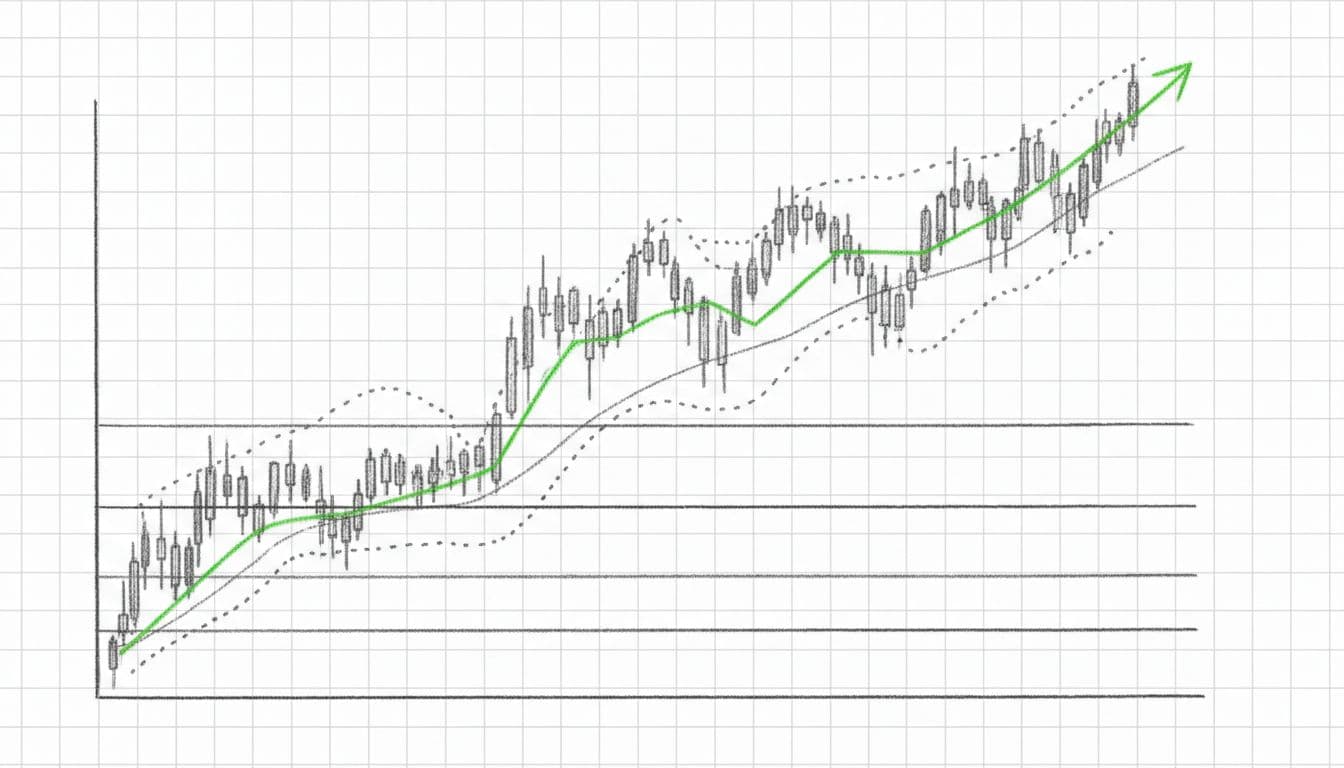
Korea traders pay close attention to moving averages, and one stands out: the 120-day moving average, often called the "Half-year Life Line." When a hot KOSDAQ theme stock holds above it, sentiment usually stays optimistic. Once it loses that line, sellers can get aggressive.
Recent tape, using the provided points, shows why Rainbow is not a "set it and forget it" chart. The stock ran from about ₩274,000 (Jul 2025) to peaks near ₩860,000 (Feb 2026), with large daily swings along the way. That kind of move can feel like an elevator with a loose cable. You can still ride it, but you need rules.
For practical "watch zones," the provided support levels sit around:
- ₩391,810
- ₩360,486
- ₩329,162
- An older heavy-volume base near ₩273,000
Treat these as areas where buyers previously showed up, not magic floors. Theme stocks can gap through support on a single risk-off day, so risk control matters more than perfect entries.
K-technical table to include (5, 20, 120-day MAs) and how to read it fast
The data pull did not include exact moving average values, so you must check them on TradingView or Yahoo at publish time. This table is the fast way to interpret momentum without overthinking.
| Line to check | Value (fill from your chart) | Fast read |
|---|---|---|
| Price | ₩756,500 (Mar 9, 2026 close) | Compare to MAs to judge trend strength |
| 5-day MA | (fill) | Short-term heat, flips quickly |
| 20-day MA | (fill) | Momentum line for swing traders |
| 120-day MA (Half-year Life Line) | (fill) | Key sentiment line in Korea |
A simple read: above the 20-day often signals strong momentum, while losing the 120-day can change the crowd's mood fast.
For another third-party view of price history and market cap snapshots (with its own timestamps), see Rainbow Robotics on Simply Wall St.
Investor psychology: where retail investors often take profits in a hot K-Theme
Retail traders often sell into round numbers and recent highs because those levels feel "safe." With Rainbow, the recent peak zone near ₩860,000 is an obvious reference point, since traders remember pain and profits there.
On the downside, the ₩390k to ₩330k band can attract dip buyers because it lines up with prior supports. Meanwhile, the older base near ₩273,000 is the "last line" many traders watch because it marks the start of the big run.
Keep a short risk-control routine:
- Size smaller than you think you need
- Set an exit before you enter
- Avoid chasing gap-ups when spreads widen
Investor Alert: risks to consider, plus a simple hedge plan if the theme cools
This section is the part most people skip, and then wish they hadn't.
First, valuation risk looks extreme in common data snapshots. The realtime pull listed a P/E in the thousands and a very high price-to-sales, which usually means the market prices in years of growth already. When expectations are that high, even a minor disappointment can cause a big drawdown.
Second, liquidity and gap risk are real. Rainbow has shown large daily swings. In fast markets, stops can fill worse than you expect, especially if the stock gaps at the open.
Third, humanoid execution risk is not a theory. Timelines can slip. Safety certification can slow rollout. Buyers may want pilots, not fleets. Even if demand exists, unit economics can take time to improve.
Fourth, headline and partnership risk cuts both ways. A big-name connection can lift the stock, but it also sets a higher bar. If investors expect a flood of joint projects and it doesn't happen, sentiment can turn quickly.
Fifth, governance and overhang matter. Capital raises, convertibles, and stock compensation can change supply. That's why you should actively monitor filings on Korea's DART disclosure system, not just English summaries.
A simple hedge idea if the robotics theme cools: balance your exposure with a more defensive Korea allocation, such as a dividend or value tilt, or a less-hyped automation beneficiary with steadier cash flows. The goal is not perfection, it's avoiding a portfolio that lives or dies on one theme.
DART filing check and governance overhang: what to scan before you buy
On DART, search the company and scan for:
- Major shareholder changes
- Capital raises and new share issuance
- Convertible bonds or other dilutive financing
- Stock-based compensation updates
- Related-party transactions
- Material contract announcements
Missing data in a quick screen doesn't mean "no risk." It only means you need to verify.
If you can't explain what would make you sell, you're not investing yet, you're hoping.
Conclusion
Rainbow Robotics (277810.KQ) earns a NEUTRAL rating for new K-stock investors in March 2026. The robotics narrative is strong, and the product scope is exciting. Still, the market price reflects huge expectations, and the chart shows sharp volatility.
Next steps are simple: (1) verify the latest price and fill the 5, 20, and 120-day MA table from a live chart, (2) check DART for any new filings or ownership changes, and (3) decide in advance what price level means you're wrong and will exit. If you can do those three things calmly, you'll already be ahead of most first-time theme-stock buyers.
Related: Why We Should Buy Korean Robot Stocks (And How to Do It Without Chasing), NAVER Stock (035420.KS) and the End of AI "Issue Timeline": What It Means for News, Trust, and Investors (March 2026), Kakao Corp (035720.KS) Stock Guide for New Investors (March 2026).
Originally published on SeoulStockAlpha.