Doosan Enerbility is back on many KOSPI watchlists, and the price action explains why. The shares closed at ₩98,000 on March 6, 2026, up 8.29% in a single session, after a powerful about +270% run over the past year. For new investors, that kind of move can feel like spotting a train already at speed.
Still, the business story is easy to frame. Doosan Enerbility builds the heavy, high-spec equipment behind power plants, especially nuclear plant components, early-stage SMR supply-chain parts, and turbines. In 2026, rising electricity demand from AI data centers, plus grid stability needs and decarbonization targets, is pushing nuclear and gas back into the conversation. With KOSPI sentiment improving and reports of foreign and institutional buying, Doosan Enerbility (034020 KRX): A Global Leader in Nuclear Power and SMR Technology – 2026 Growth Analysis is a timely lens for understanding what's driving attention, and what we should verify next.
What Doosan Enerbility actually builds, and why its nuclear know-how matters
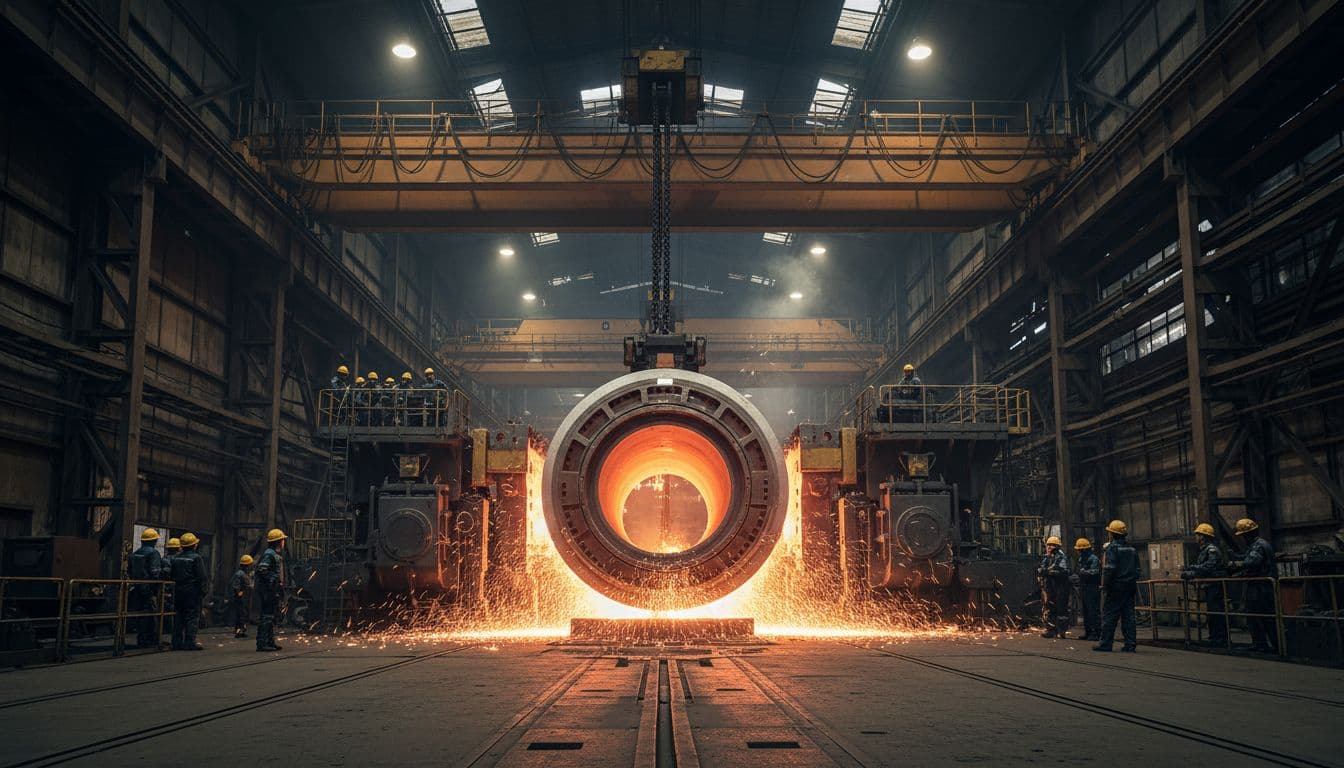 An industrial forging scene for nuclear-grade equipment, created with AI.
When we hear "nuclear," we often picture a whole plant. Doosan Enerbility sits deeper in the stack. It's a manufacturer of mission-critical hardware that has to survive decades of heat, pressure, and inspection.
This is heavy industry, not a quick-turn electronics business. Lead times run long. Quality systems dominate the schedule. A single component can require specialized forging, machining, welding, and certifications, with traceability down to materials and processes. That's why the barriers to entry stay high. If a utility or EPC contractor needs a nuclear-grade part, they can't just switch suppliers like they might for standard industrial equipment.
Doosan Enerbility's long operating history in nuclear related manufacturing (often described as roughly four decades) matters because reputation is part of the product. In cycles where new nuclear construction accelerates, supply chains tighten. At that point, qualified capacity can turn into bargaining power. Pricing doesn't become "easy," but it can become more rational because delays and rework are so costly for buyers.
The nuclear reactor parts that drive its moat
In simple terms, Doosan Enerbility focuses on the largest, most regulated pieces of a nuclear plant's core hardware set. Investors commonly discuss items such as:
- Reactor vessel
- Steam generator
- Reactor coolant pumps
- Pressurizer and other major primary-system components
Each of these parts earns its keep because it has to meet strict safety standards, and because the manufacturing steps are hard to copy at scale. Forgings can be enormous, machining tolerances are tight, and documentation is not optional.
A good mental model for beginners: the reactor vessel is the plant's main "pressure tank." If that tank isn't perfect, nothing else matters. That's also why buyers value suppliers who can prove consistent quality across projects.
Its role as an SMR "foundry", and what that means for growth
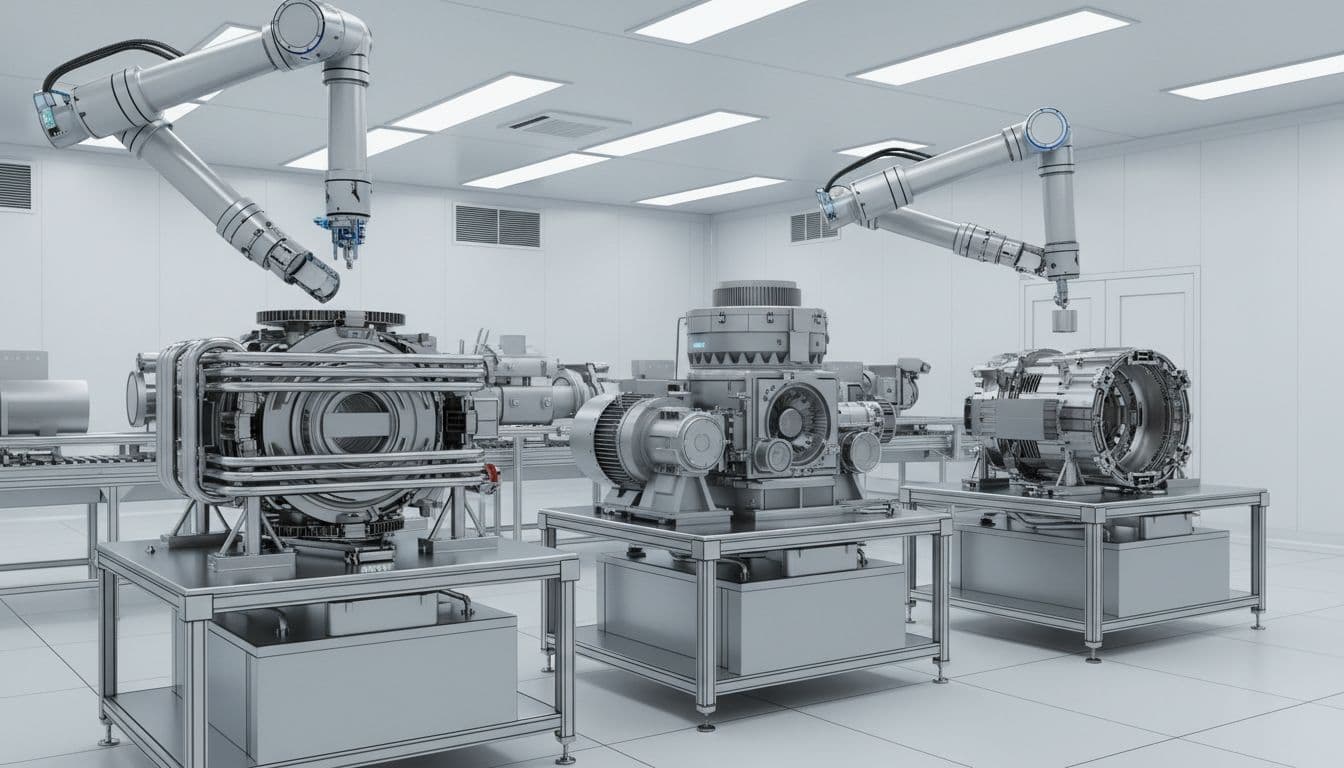 SMR-style component assembly and inspection, created with AI.
SMRs (small modular reactors) get attention because they promise repeatability. Instead of one massive custom build, the idea is more like building aircraft engines: standardized modules, manufactured with tight controls, then installed on site.
That's where a "foundry-like" role can emerge. If SMR developers scale, they'll need reliable producers of nuclear-grade components and subassemblies. In 2026, policy talk links SMRs to energy security and always-on power for data centers, but the timeline risk stays real. Licensing, siting, and financing often move slower than headlines.
So, when we hear about possible SMR supply agreements, we treat them as verification items, not instant revenue. The payoff, if it comes, usually arrives in stages: qualification work first, then long-lead materials, then serial production.
Where new orders could come from, with the Czech nuclear project as a real-time example
Order flow is the heartbeat of this stock. Because projects are large and schedules are long, orders often arrive in chunks. As a result, one contract can reset expectations on backlog and margins, even before profits show up.
Europe has become a key "watch zone" because it blends three pressures: energy security, aging power assets, and emissions targets. The Czech Republic's Dukovany project is one of the clearest real-time examples of how Doosan Enerbility can translate manufacturing strength into export momentum.
Czech Republic Dukovany Units 5 and 6, the contract that signals Europe traction
In February 2026, Doosan Enerbility signed a contract reported at about ₩320 billion to supply steam turbines and turbine control systems for Dukovany Units 5 and 6. We can see coverage in outlets like Businesskorea's report on the Czech steam turbine contract.
The strategic point isn't just the number. This deal also highlights a "Team Korea plus local footprint" approach, pairing Doosan Enerbility with Doosan Škoda Power in Europe. That structure can matter in Europe, where local content, service capability, and political comfort often shape procurement.
Upside exists if this model repeats. For example, some reporting mentions Temelín Units 3 and 4 as a potential follow-on path, but we should treat that as a watch item, not a promise.
Potential next steps in Europe and the Middle East, and what would confirm the story
A second confirmation layer is process. The Czech project has already moved into a more formal bilateral working structure, as described by World Nuclear News coverage of a Czech-Korean steering committee. That kind of governance often signals that both sides want the timeline to hold.
For the Middle East, the logic is straightforward: electricity demand keeps rising, and countries want diversified power systems. Still, our March 2026 news checks don't confirm specific new Doosan nuclear export orders beyond the Czech-linked developments.
Here's the short checklist we can use to separate narrative from progress:
- Bidding milestones and clear schedule updates
- Preferred bidder announcements or framework awards
- Export financing participation and guarantees
- Local partnerships for service and installation
- Long-lead bookings (forgings, castings, controls)
If we don't see milestones and long-lead commitments, "future orders" stay theory.
The non-nuclear engines of growth, plus the key risks we should track
Gas turbines for AI data centers, plus hydrogen-ready upgrades
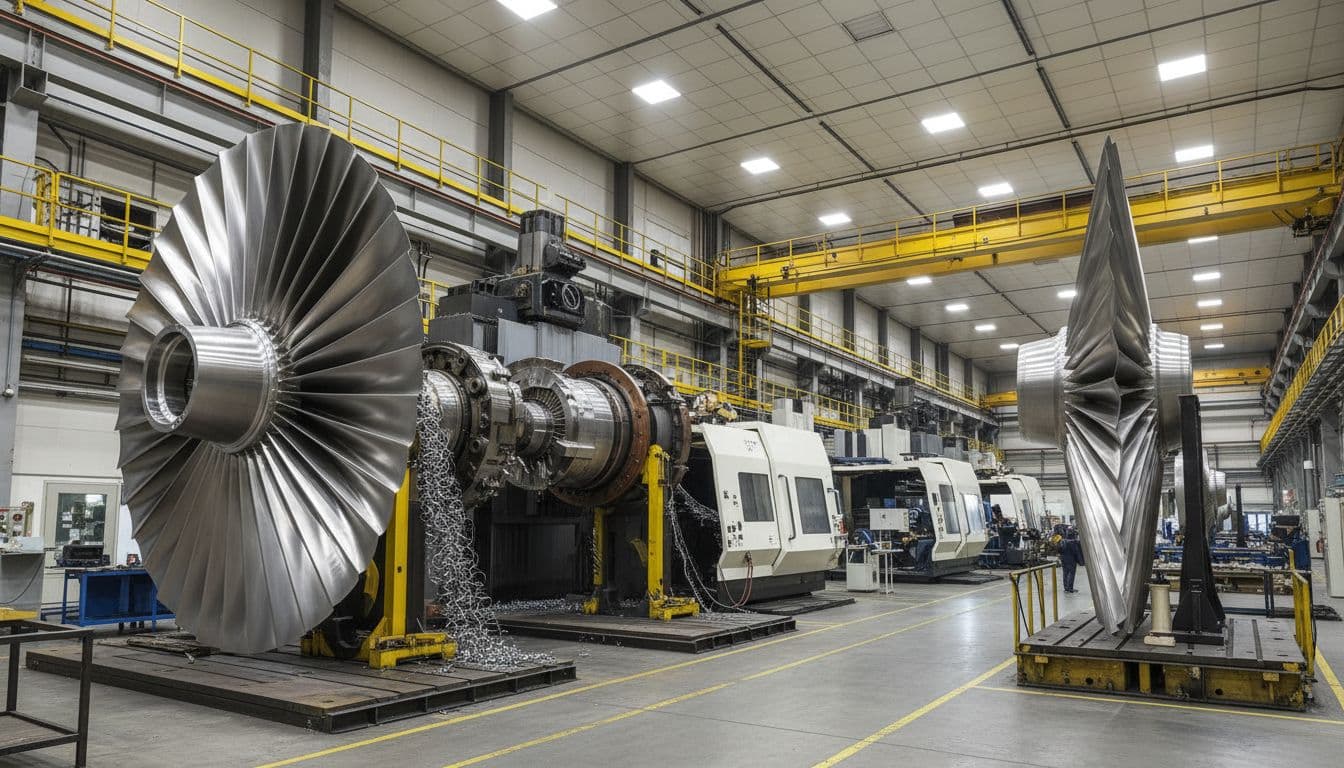 Gas turbine blade production in a factory setting, created with AI.
Even if nuclear wins the long-term argument, gas often wins the schedule. Gas plants can be built faster than nuclear, and they help stabilize grids that add more renewables. That matters in 2026 because AI data centers don't just need energy, they need dependable energy.
Doosan Enerbility positions gas turbines and related services as a major pillar alongside nuclear. For us, the key is not a single headline contract, it's whether gas turbine orders become repeatable and whether service revenue grows over time. Hydrogen-readiness also matters because it can extend turbine life in a lower-carbon future, even if 100% hydrogen operation remains a later milestone.
Offshore wind exposure, plus the risks behind the stock's big run
Offshore wind remains part of the broader portfolio, but we keep expectations grounded. Project economics can swing with rates, permitting, and grid connections, and those shifts can hit suppliers unevenly.
On risk, we prefer plain facts. Recent screens show an operating margin around -0.61% (TTM) and valuation multiples that imply optimism (for example P/B near 8.21 and EV/EBITDA around 65.85, depending on data source and timing). Beta readings in our checks sit around 0.75, which suggests the stock isn't always volatile day-to-day, yet big trend moves can still happen after a +270% year.
We also watch balance sheet strain because heavy manufacturing can absorb cash during ramp-ups.
Our practical watch list stays short:
- Order intake and backlog conversion
- Backlog quality (fixed-price risk, escalation clauses)
- Operating margin trend by segment
- Net debt direction and funding needs
- Export mix (Korea vs. Europe vs. Middle East)
- Policy and permitting timelines for nuclear and SMRs
Conclusion
Doosan Enerbility's 2026 story comes down to three engines we can actually monitor: a nuclear component moat built over decades, a potential SMR supply-chain role that could scale over time, and turbine demand tied to grid stability and data center power growth. The Czech Dukovany work, including the February 2026 turbine contract, offers a visible foothold in Europe, while hydrogen-ready upgrades and offshore wind sit as longer-horizon options.
As of March 6, 2026, the stock closed at ₩98,000, and we should expect fast price moves after such a strong year. Our next-step checklist is simple: track the next earnings date, new order announcements, Czech project milestones, turbine delivery and service updates, and broader KOSPI sentiment including foreign flow trends. Discipline matters most when a great story meets a heated chart.