AI chips get the headlines, but SK Hynix HBM is one of the parts that decides who can ship systems on time. When high-end GPUs act like hungry engines, HBM is the fuel line that has to keep up. If it doesn't, the whole machine slows down.
In March 2026, SK hynix sits at the center of that bottleneck, and the stock price reflects it. At the same time, the chart has cooled after a hot run, so we need both the business story and the Korea-style technical context to stay grounded.
Executive Summary (March 2026): Rating, Price, and What We're Watching
[NEUTRAL] for now. We respect the leadership position, but we also see short-term shakeouts after a fast rally.
- Company and global ticker format: SK hynix (000660.KS). On Yahoo Finance and TradingView, ".KS" is for KOSPI-listed stocks and ".KQ" is for KOSDAQ-listed stocks.
- Price (dual currency): SK hynix (000660.KS) closed at ₩930,000 on March 12, 2026, about $670 (USD estimate, rates move daily).
- What's changed recently: the stock fell about 12.67% over the last 10 trading days, a reminder that even great AI themes don't move in a straight line.
- ETF note: this is an individual stock, not an ETF, so one news headline can swing it hard.
The simple takeaway: SK hynix looks strong on AI memory fundamentals, but the near-term tape is choppy, so we want cleaner price action before we get aggressive.
Why SK Hynix Leads AI Memory (and Why HBM Is the "Toll Road")
HBM (high-bandwidth memory) matters because AI workloads don't just need compute, they need fast, wide memory access. Think of a GPU as a busy kitchen. The chefs can be world-class, but if ingredients arrive through a narrow hallway, dinner service collapses. HBM widens that hallway.
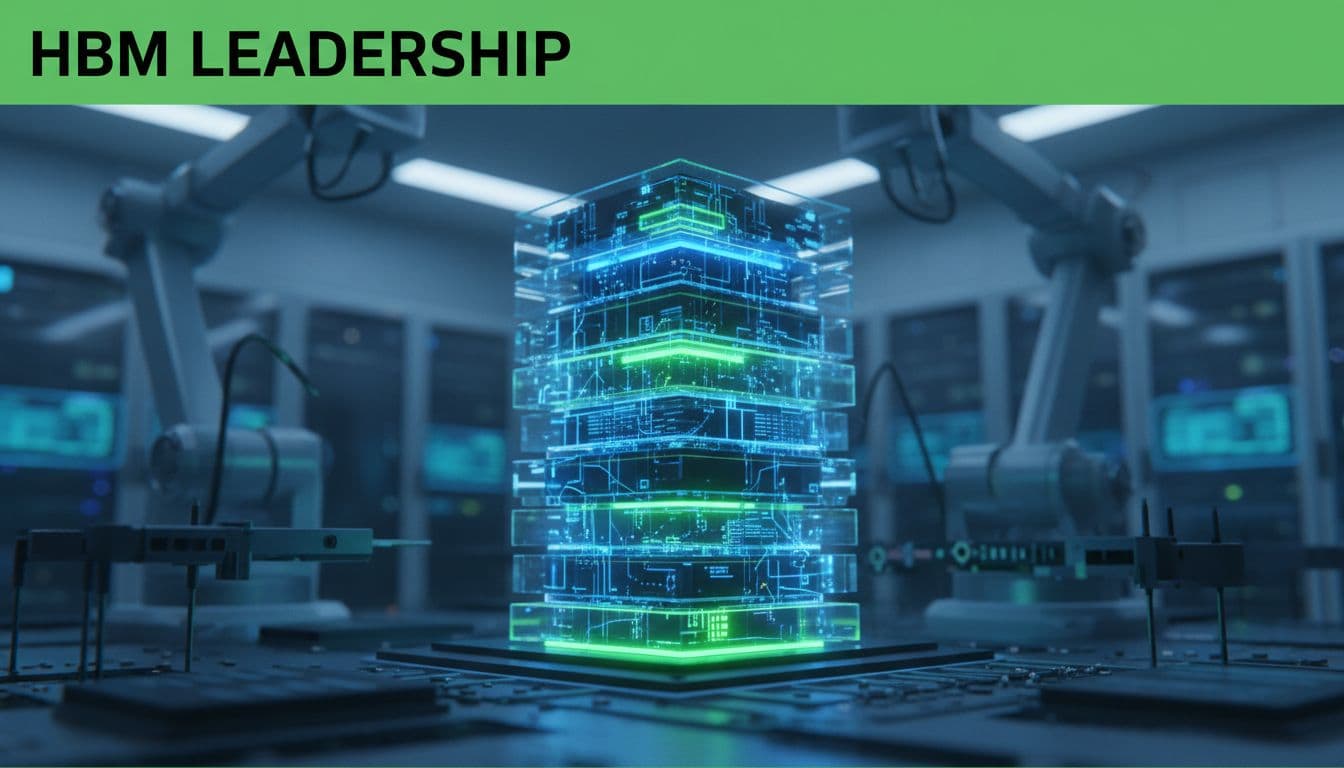
Value chain positioning: where the profit pools are forming
In the AI server value chain, SK hynix sits in a spot that's hard to replace:
- Upstream: process technology, yields, and supply discipline (memory is still cyclical).
- Midstream: HBM stacking, testing, and packaging coordination (execution risk is real).
- Downstream: qualification with GPU and accelerator platforms, where reliability and power efficiency decide who wins orders.
This is why "HBM sold out" headlines matter. When customers plan AI clusters, they don't want maybes, they want delivery schedules.
We also have to separate two ideas: HBM demand can surge even when phone or PC demand stays weak. That split is a big reason SK hynix keeps getting treated like an "AI proxy" in Korea.
For more context on the company's own view of demand and product roadmap, see SK hynix's HBM-led memory supercycle outlook.
Market leadership: what "share" really signals
Different reports estimate different HBM market shares, but the direction is consistent: SK hynix is widely seen as the leader, often cited in the 60% to 70% range in parts of the HBM market. Order wins also act like proof points. One widely circulated report points to strength tied to next-generation GPU platforms, including NVIDIA Vera Rubin HBM4 orders.
We don't treat any single number as perfect. Still, when multiple sources point the same way, we treat it as a real edge.
K-Technical Analysis: Moving Averages, the "Half-year Life Line," and Key Price Zones
Great companies can be bad entries. That's why we combine the HBM story with Korea-style chart habits.
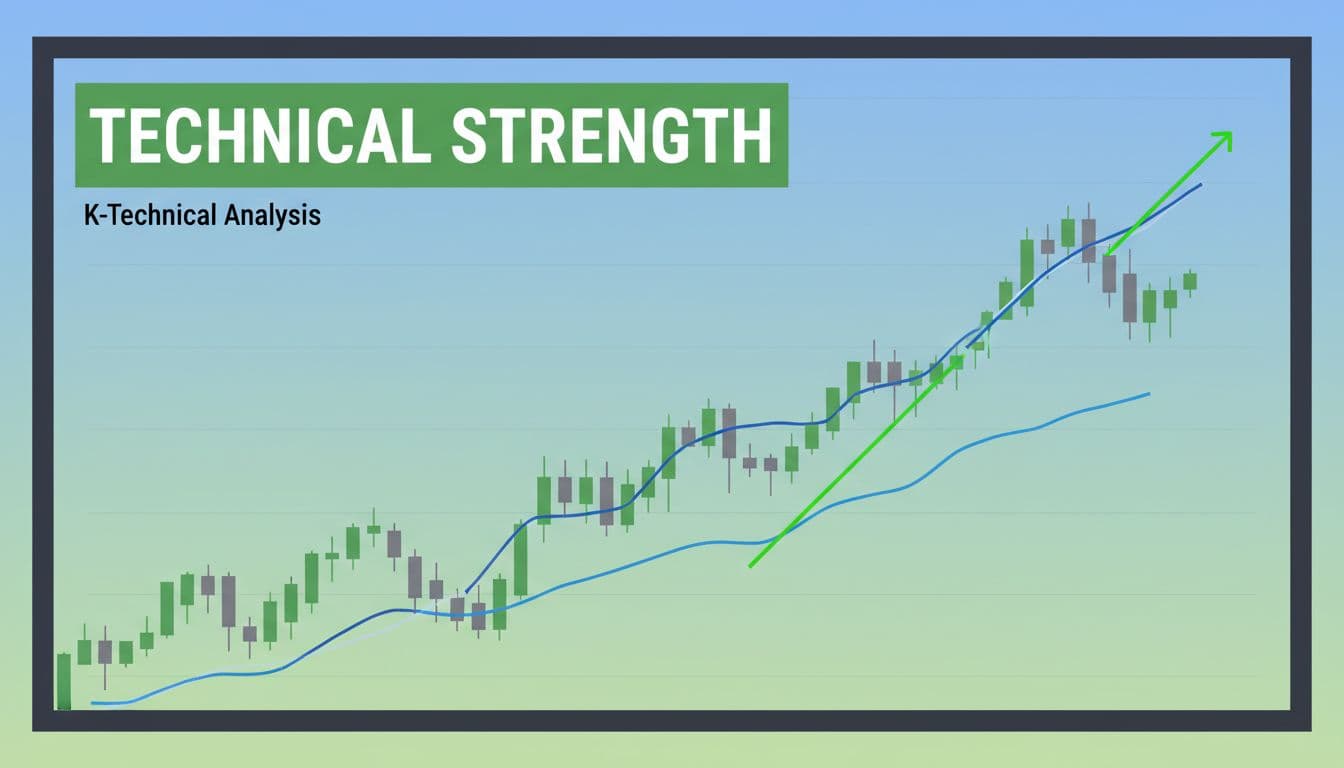
Moving averages we track (5, 20, 120)
We use three simple moving averages (SMA) as a beginner-friendly set. In Korea, many traders call the 120-day MA the "Half-year Life Line", because it often separates "healthy pullback" from "trend break."
Here's our quick snapshot table for March 2026. Some chart feeds don't publish these exact SMA values in open summaries, so we treat them as "check on your chart" numbers, not as fixed facts.
| Moving Average (SMA) | Value (March 2026) | How we use it |
|---|---|---|
| 5-day | N/A (varies by feed) | Short-term momentum and fast turns |
| 20-day | N/A (varies by feed) | Swing trend, often acts like first "bounce" line |
| 120-day (Half-year Life Line) | N/A (varies by feed) | Medium trend health, breaks matter in Korea |
If price is falling for multiple sessions, we assume the 5-day can slip under the 20-day. That setup often invites fast selling, even without bad news.
Support, resistance, and retail investor profit-taking levels
From the recent tape, we're watching these practical zones:
- Near-term resistance: around ₩934,000 to ₩955,000, where recent closes and early-March highs can attract selling.
- Psychological profit-taking: ₩1,000,000 (one million won) is a classic "sell some" level for retail.
- Big ceiling: the ₩1.10M area lines up with the 52-week high zone, which can bring heavy supply.
On the downside, the market already showed it can flush quickly (we saw trades down into the high-₩800,000s). If we lose the bounce, retail often stops out late, then re-buys late. Knowing that pattern helps us avoid chasing.
Investor Alert: Risks to Consider (Plus a Simple Hedge Idea)
Even with SK Hynix HBM leadership, we should respect the risk list, because memory stocks punish overconfidence.
The risks we take seriously
Demand concentration risk sits at the top. When a few AI platforms drive orders, any qualification delay or product change hits sentiment fast.
Supply response risk is next. Competitors don't stand still. If rival yields improve faster than expected, the "HBM scarcity" narrative can cool quickly. For a helpful discussion of the supply-side pinch, see this HBM3E supply bottleneck analysis.
K-theme volatility also matters. In Korea, "AI" trades like a theme basket. Foreign flows, KRW moves, and headline risk can swing prices even when the long-term story stays intact.
Governance and valuation overhang is the quiet risk. After a major run, investors demand cleaner capital allocation and clearer shareholder return plans. If the market senses "growth at any cost" capex, the multiple can compress.
A beginner-friendly hedge if SK hynix drops
If 000660.KS falls because the AI theme cools, we can hedge with something that often behaves differently:
- Samsung Electronics (005930.KS) as a "different driver" mega-cap within Korea tech (still correlated, but not identical).
- Or a broad Korea index exposure (KOSPI-style basket) to reduce single-name shock.
The goal isn't to be perfect. It's to avoid the emotional trap of holding one volatile name with no plan.
Conclusion: How We'd Treat SK Hynix HBM From Here
SK hynix (000660.KS) earned its AI memory reputation, and SK Hynix HBM sits close to the center of today's AI infrastructure spending. Still, the March 2026 chart reminds us that leadership doesn't prevent sharp pullbacks. If we see stabilization near key support and a healthier short-term trend, we'll get more constructive. Until then, we prefer patience, position sizing, and a clear sell plan, because volatility is part of the Korea AI trade.
We're sharing this for education, not as investment advice.